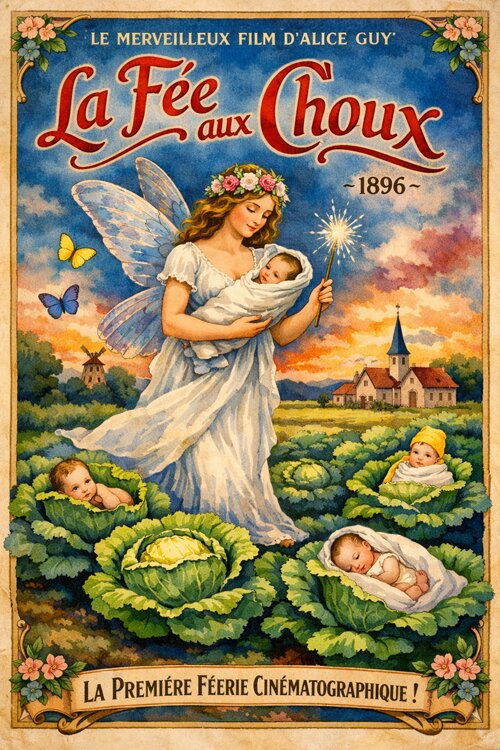
The Cabbage-Patch Fairy
1900
No user ratings available yet
Representation score: 2.0 out of 10

Representation Score
Limited
1896
Director
Alice Guy-Blaché
Runtime
1 minutes
Average Rating
No ratings yetNew Showbiz Analysis
The film's importance lies mainly in its historical and structural significance rather than its narrative content. Directed by Alice Guy-Blaché, it sets a crucial precedent for female authorship in cinema. Despite the lack of visual details, her creative leadership adds value. The fantasy elements suggest an early interest in challenging conventional social structures.
Category Breakdown
The film focuses on a honeymoon couple, showing domestic life but doesn't include any queer subtext or non-straight identities.
Alice Guy-Blaché, the first female director, challenges early patriarchal filmmaking traditions. The fairy character plays a unique role in child creation, offering a non-traditional perspective on lineage.
Due to the film being lost, there is no verifiable information about the racial makeup of the cast or characters.
The film uses magical realism to explore parenthood, focusing on wonder rather than strict social or religious norms of the late 19th century.
There is no documented evidence about the portrayal of neurodivergence or physical disabilities in the surviving descriptions of this work.
Present on Screen
Limited or Absent
Official Synopsis
A brief fantasy tale involving a strange fairy who can produce and deliver babies coming out of cabbages. Note: This is a LOST film; the existing film of the same name is the remake from 1900.
1900
2001
1902
1902
1905
1906
1905
1914
No reviews yet. Be the first to share your thoughts on this movie!
Use the rating form above to leave a star rating and optional review.