
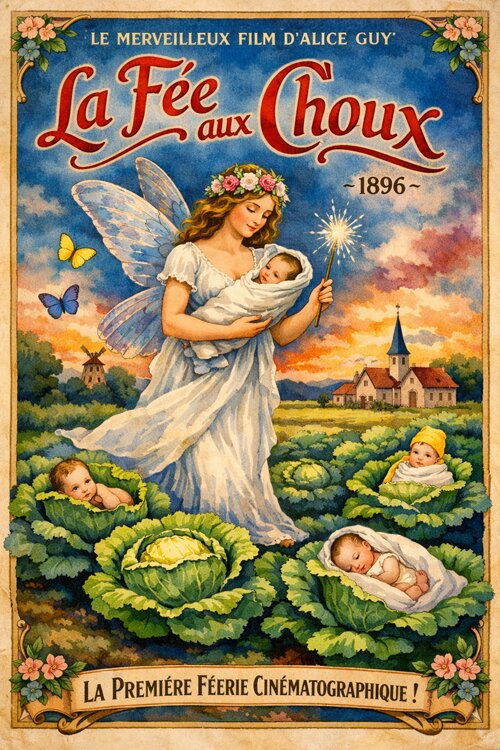
The Cabbage-Patch Fairy
1896
No user ratings available yet
Representation score: 3.4 out of 10
Representation Score
Minimal
1900
Director
Alice Guy-Blaché
Runtime
2 minutes
Average Rating
No ratings yetNew Showbiz Analysis
Alice Guy-Blaché's work marks a significant step in cinema history, transitioning from simple actualities to structured narratives. Her direction sets a foundation for creative storytelling in early film. However, the film's content is limited by the social and demographic norms of its time. It relies heavily on traditional European folklore, which restricts its engagement with diverse social representations. While the film is groundbreaking for its narrative structure, its thematic scope is narrow, focusing on established mythological stories rather than diverse social issues.
Category Breakdown
The film does not include any non-binary or LGBTQ+ identities or same-sex relationships. It follows a traditional mythological story about children's origins based on biological families.
A female fairy is the main character. She drives the fantasy storyline but fits the traditional role of a fairy rather than challenging gender norms.
The film reflects the demographics typical of the early 1900s, focusing on European folklore without showing any racial diversity or casting actors from different backgrounds.
The story uses traditional folklore and whimsical storytelling. It emphasizes fantastical ideas of family and birth without addressing secular or anti-capitalist themes.
There is no visible or documented portrayal of physical or neurodivergent disabilities in this short film.
Present on Screen
Limited or Absent
Official Synopsis
The fairy at a cabbage patch hovers over the babies. This is a remake of Guy's 1896 film on the same subject, this time shot in 35 mm.
1896
1902
1905
1908
1906
1905
1900
1906
No reviews yet. Be the first to share your thoughts on this movie!
Use the rating form above to leave a star rating and optional review.