Roads of Kiarostami
2006
No user ratings available yet
Representation score: 2.6 out of 10
Representation Score
Minimal
2003
Director
Abbas Kiarostami
Runtime
74 minutes
Average Rating
No ratings yetNew Showbiz Analysis
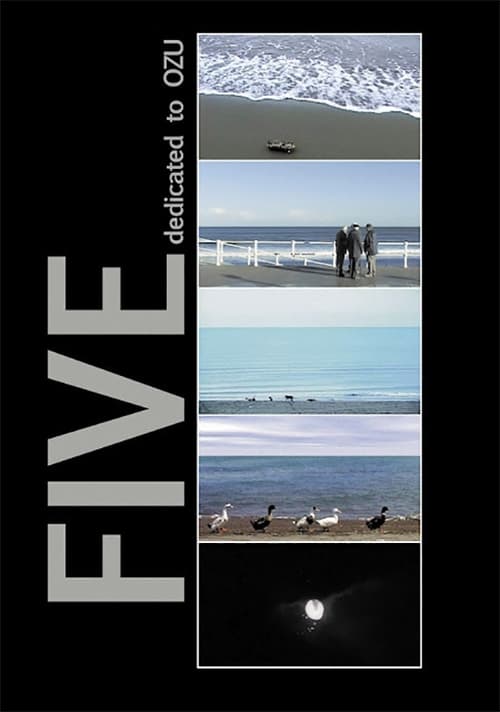
Five Dedicated to Ozu is an experimental essay film that prioritizes formalist observation over character-driven narratives. Using a handheld DV camera, Kiarostami captures the rhythms of daily life, deconstructing the conventional cinematic gaze through a meditative dialogue between Iranian and Japanese aesthetics. While the film lacks demographic markers like gender or sexual orientation, it offers significant intellectual diversity. By focusing on stillness and the passage of time, it challenges Western-centric film hegemony and capitalist demands for constant plot-driven stimulation. Ultimately, the work functions as a post-colonial dialogue. It replaces traditional human-centric storytelling with a focus on environmental textures and the dignity of the ordinary.
Category Breakdown
The film lacks a traditional cast or dialogue-driven social interactions. Since it focuses on landscapes, there are no depictions of gender identity or sexual orientation.
The narrative structure avoids character dynamics entirely. With a focus on light and movement rather than human social hierarchies, there is no evidence of gendered power dynamics.
The work combines Iranian and Japanese visual styles, offering a diverse aesthetic. However, the absence of human subjects prevents a higher score for active representation.
Kiarostami promotes secularism by emphasizing subjective, non-narrative reality. The film highlights the dignity of everyday life, serving as a subtle critique of traditional hierarchies.
There are no characters or human subjects depicted. Therefore, there is no opportunity to assess the representation of neurodivergence or physical disability.
Present on Screen
Limited or Absent
Official Synopsis
Finding himself in a house in the north of Iran by the Caspian Sea, the director picked up his handheld DV camera and began filming the seemingly anodyne events happening on the 500 metres of beach in front of his house—a piece of wood toyed with by the waves, people walking by the sea, indistinct shapes on a wintry beach or noisy ducks.
2006

1929

2004

1983

1994
2013
2003

2017
No reviews yet. Be the first to share your thoughts on this movie!
Use the rating form above to leave a star rating and optional review.