
Back and Forth
1969
No user ratings available yet
Representation score: 0.6 out of 10
Representation Score
Minimal
1964
Director
Ken Jacobs
Runtime
10 minutes
Average Rating
No ratings yetNew Showbiz Analysis
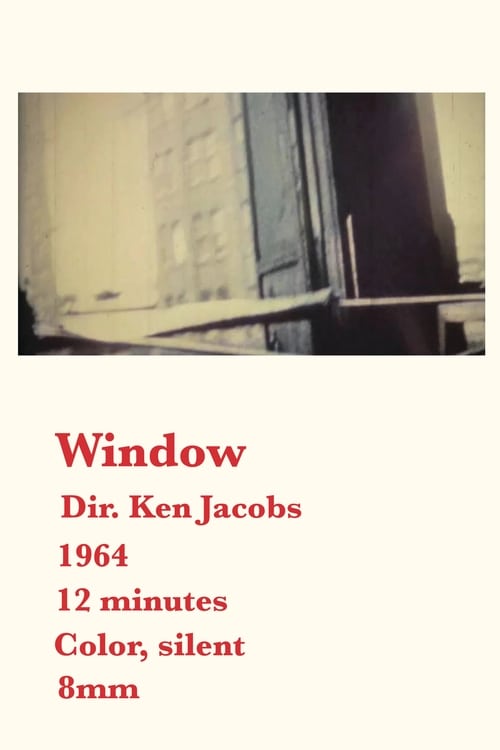
Ken Jacobs’ *Window* is a structuralist, avant-garde study of urban environments that avoids traditional narrative structures. It serves as a formalist exploration of the cinematic gaze, manipulating depth planes and object-forms with a zoom lens. As a non-narrative, observational work, it lacks the character-driven framework needed to assess identity-based representation. It does not depict specific social hierarchies, dialogue, or interpersonal dynamics. The low diversity score reflects its status as a formalist exercise rather than a lack of progressive values.
Category Breakdown
Since the film focuses on architectural and urban textures without characters or interpersonal relationships, there is no depiction of LGBTQ+ identities.
Without characters to inhabit roles, the film does not engage with traditional gender hierarchies or domestic dynamics.
The zoom lens emphasizes object-forms and depth planes over human subjects. Any presence of diverse populations is a result of the urban setting rather than intentional representation.
The film aligns with avant-garde movements that challenge conventional social structures. However, the absence of thematic commentary on religion or family means it does not address these topics.
The film focuses solely on the relationship between the camera and the window frame. There are no depictions of individuals or engagement with disabilities.
Present on Screen
Limited or Absent
Official Synopsis
The moving camera shapes the screen image with great purposefulness, using the frame of a window as fulcrum upon which to wheel about the exterior scene. The zoom lens rips, pulling depth planes apart and slapping them together, contracting and expanding in concurrence with camera movements to impart a terrific apparent-motion to the complex of the object-forms pictured on the horizontal-vertical screen, its axis steadied by the audience's sense of gravity. The camera's movements in being transferred to objects tend also to be greatly magnified (instead of the camera the adjacent building turns). About four years of studying the window-complex preceded the afternoon of actual shooting (a true instance of cinematic action-painting). The film exists as it came out of the camera barring one mechanically necessary mid-reel splice
1969
1929
1992
1977

1967
1974
1974
1972
No reviews yet. Be the first to share your thoughts on this movie!
Use the rating form above to leave a star rating and optional review.