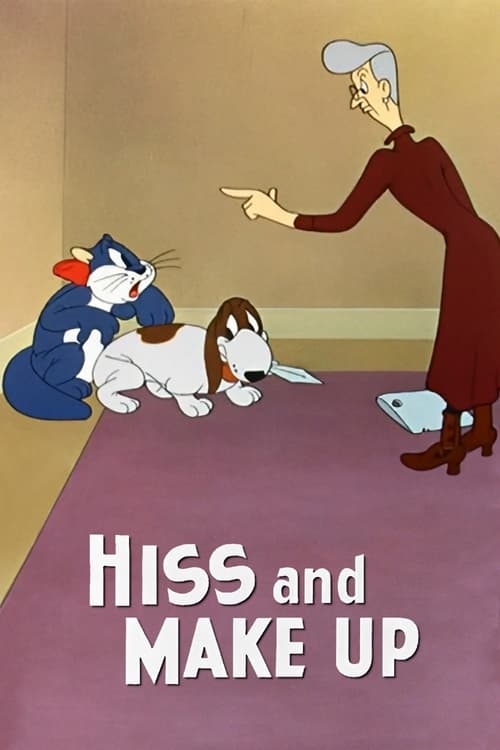
Hiss and Make Up
1943
No user ratings available yet
Representation score: 0.4 out of 10
No Poster Available
Representation Score
Limited
1946
ApprovedDirector
Bob Wickersham
Runtime
5 minutes
Average Rating
No ratings yetNew Showbiz Analysis
Catnipped is a mid-century animated short that emphasizes physical slapstick humor over character development. The plot centers on a classic predator-prey conflict involving a cat, a dog, and a canary. The film relies on slapstick clichés and a closed-loop comedic structure typical of its time. Since the characters are anthropomorphic animals, the narrative avoids human social complexities and does not engage with progressive representation or systemic critiques.
Category Breakdown
The story revolves around a predator-prey relationship among a cat, a canary, and a dog. There are no characters with LGBTQ+ identities or same-sex relationships.
Characters are defined by their animal species rather than by gender roles. The conflict arises from natural instincts rather than societal gender norms.
The film features a group of anthropomorphic animals and does not address human racial or ethnic diversity. It does not use animal characters to represent complex racial dynamics.
The story follows a straightforward, linear moral lesson using a comedic cliché. It does not challenge traditional views or promote secular or anti-authoritarian themes.
A blood transfusion leads to a physiological change used for comedic effect. This altered state is employed for slapstick humor rather than exploring disability in depth.
Present on Screen
Limited or Absent
Official Synopsis
The cat of the house lets the canary of the house out of its cage, with intent of eating said bird. The dog of the house shows up, with intent of not allowing the cat to eat the canary, and the cat is soon in need of medical attention, including a blood transfusion. The blood-donor is the canary, and the cat is soon chirping like a canary.
1943
1949
1948
1943
1942
1952
1961
1953
No reviews yet. Be the first to share your thoughts on this movie!
Use the rating form above to leave a star rating and optional review.