Midnight's Children
2012
No user ratings available yet
Representation score: 8.9 out of 10
Representation Score
Good
1998
Director
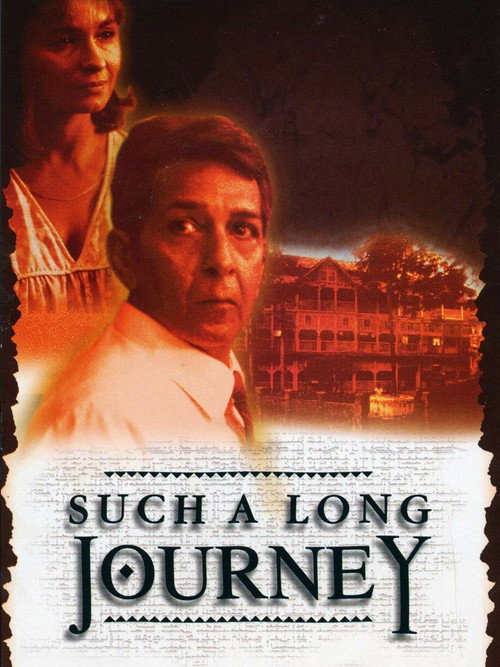
Sturla Gunnarsson
Runtime
113 minutes
Average Rating
No ratings yetNew Showbiz Analysis
Such a Long Journey is a nuanced exploration of the Parsi community in 1971 India. It succeeds by focusing on a specific, historically underrepresented minority rather than a homogenized national narrative. The film's strength lies in its ethnic specificity and its use of religious symbols to represent pluralism, providing a meaningful disruption of the dominant majority clichés often found in South Asian cinema. However, the film remains limited by its adherence to period-specific social configurations, lacking representation for LGBTQ+ identities and not addressing disability.
Category Breakdown
The film does not feature prominent LGBTQ+ characters or relationships that challenge traditional heterosexual norms. Instead, it focuses on the traditional Parsi social structures and domestic life of the 1971 setting.
Despite operating within a patriarchal system, the film emphasizes the resilience of women. The matriarchal influence within the Mascat family provides stability and leadership during times of political and economic turmoil.
The film stands out by centering the Parsi minority in post-colonial India. It avoids whitewashing and majority-centric clichés through authentic casting and a focus on a specific ethnic group.
The story uses religious pluralism as a metaphor for communal solidarity. It offers a sophisticated critique of systemic instability and the pressures of urban decay in a post-colonial context.
The film does not prominently feature characters with visible or invisible disabilities. Character struggles are defined by socioeconomic status and political displacement rather than physical or neurodivergent conditions.
Present on Screen
Limited or Absent
Official Synopsis
The story, set in 1971 at the time of the war between India and Pakistan, is based on the novel of the same name by Rohinton Mistry, an Indian now living in Toronto. "Such a Long Journey" takes place mostly in and around a large apartment complex, its courtyard and the street, which the municipal authorities want to widen so that even more choking diesel fumes can cloud the air. We meet the hero, Gustad (Roshan Seth), in the process of defending the old concrete wall that protects his courtyard from the street, and later he strikes a bargain with an itinerant artist (Ranjit Chowdhry), who covers the wall with paintings from every conceivable religious tradition, with the thought that all of the groups represented will join in defending the wall.
2012

2005
2004

1991
1973

2006
1995

2017
No reviews yet. Be the first to share your thoughts on this movie!
Use the rating form above to leave a star rating and optional review.