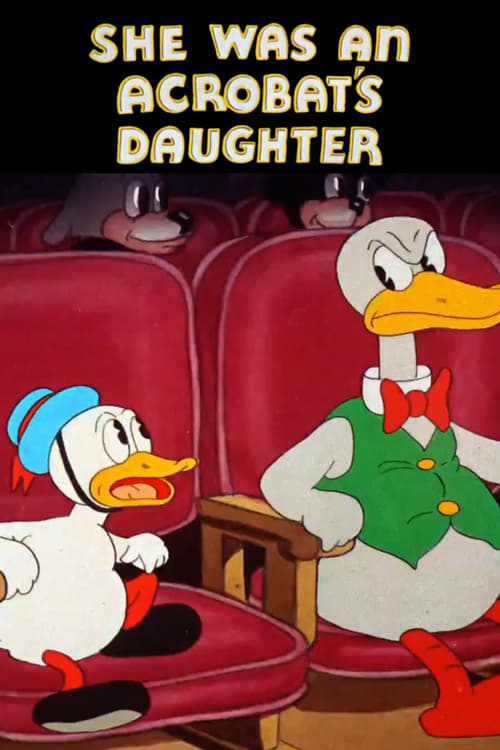
She Was an Acrobat's Daughter
1937
No user ratings available yet
Representation score: 3.5 out of 10
Representation Score
Minimal
1933
TV-GDirector
Tom Palmer
Runtime
7 minutes
Average Rating
No ratings yetNew Showbiz Analysis
This animated musical short serves as a period-specific time capsule of 1930s Hollywood. It prioritizes slapstick humor and celebrity parody over social commentary or diverse storytelling. The film reinforces the cultural norms of its era by focusing on a homogenized cast of white, famous figures. The narrative structure is built around musicality and caricature rather than reflecting multiple aspects of identity. Ultimately, the work lacks the intentionality required to challenge traditional social hierarchies, functioning instead as a standard entertainment piece for its time.
Category Breakdown
The film lacks explicit LGBTQ+ characters or narratives. It functions as a series of musical gags and celebrity caricatures within a traditional 1930s framework.
Prominent female stars like Mae West and Greta Garbo are featured as caricatures. However, these figures are used for comedic effect rather than demonstrating significant control over the story.
The cast focuses on white Hollywood figures such as Bing Crosby and James Cagney. There is no indication of characters of color having a substantial presence or control over the story.
The work relies on Western celebrity culture and musical clichés. While a caricature of Mussolini appears, it serves as a satirical gag rather than a critical look at power structures.
There is no information regarding the portrayal of physical or neurodivergent disabilities in this animated short.
Present on Screen
Limited or Absent
Official Synopsis
Blackout gags and music, including the title song originated in the movie musical Gold Diggers of 1933. Hollywood figures caricatured include Tallulah Bankhead, Joan Blondell, James Cagney, Bing Crosby, Guy Kibbee, Zasu Pitts, Mae West, Bert Wheeler and Bob Woolsey, Ed Wynn, George Bernard Shaw, Mussolini, Ben Bernie, The Boswell Sisters and Greta Garbo, who does the "Dat's all, folks!".
1937
1936

1941

1933
1935
1935
1934

1933
No reviews yet. Be the first to share your thoughts on this movie!
Use the rating form above to leave a star rating and optional review.