Undercover
1943
No user ratings available yet
Representation score: 1.8 out of 10
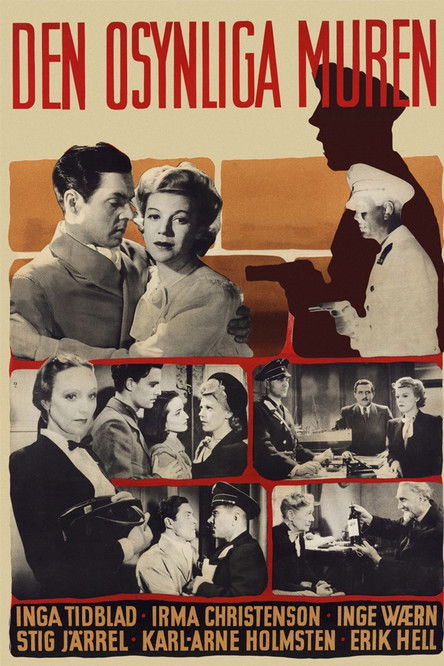
Representation Score
Minimal
1944
Director
Gustaf Molander
Runtime
105 minutes
Average Rating
No ratings yetNew Showbiz Analysis
The Invisible Wall is a mid-20th century European drama that emphasizes psychological tension and social hierarchies. While it offers more emotional complexity to its female characters compared to many war films of its time, it adheres closely to the demographic norms of the 1940s. The film does not include diverse identities, focusing instead on the immediate moral and social conflicts of war and occupation. Its narrative structure centers on interpersonal dynamics rather than a wide range of backgrounds. Overall, the film operates within the traditional social structures of its historical context, providing limited visibility for underrepresented groups.
Category Breakdown
The film follows the social and cinematic norms of 1944. There is no indication of non-straight relationships or same-sex intimacy.
A romantic triangle allows female characters to have more emotional influence. This portrayal goes beyond the passive roles often seen in war films.
The production mirrors the demographic uniformity of its era. There is no record of non-white or non-Anglo-Saxon actors being cast.
Themes revolve around the conflict between resistance and occupation. The film examines personal and societal barriers rather than specific ideologies.
There is no evidence suggesting the inclusion of characters with visible or invisible disabilities.
Present on Screen
Limited or Absent
Official Synopsis
In an unnamed country under occupation, a senior officer is killed in an attack by a member of the resistance.
1943

1945
1944
1949
1960

1943
1968
1943
No reviews yet. Be the first to share your thoughts on this movie!
Use the rating form above to leave a star rating and optional review.