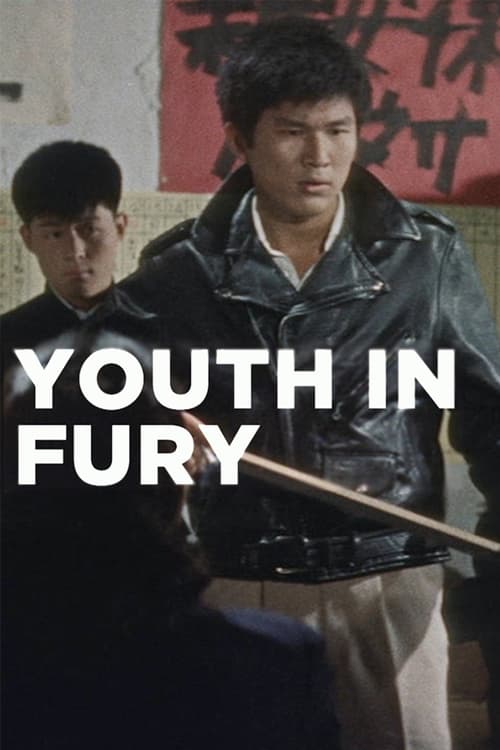
Youth in Fury
1960
No user ratings available yet
Diversity score: 4.7 out of 10

1962
Director
Masahiro Shinoda
Runtime
92 minutes
Average Rating
No ratings yetSynopsis
A young dockworker who owes his life to his boss becomes embroiled in union activity on the Yokohama waterfront. The rebel Saburo works as an errand boy for a shipping company and vents his frustrations by plucking on the guitar.
Overall Score
Fair
Category Breakdown
LGBTQ+ Representation
The film focuses on labor relations and class struggle rather than explicit queer identities. There is no verified evidence of overt LGBTQ+ characters or narratives critiquing heteronormativity.
Gender Representation
The narrative centers on the male-dominated sphere of the Yokohama waterfront. While actresses Mariko Kaga and Kyôko Kishida provide character depth, primary agency remains with the male protagonist.
Racial & Ethnic Diversity
This is a localized study of Japanese labor movements in post-war Yokohama. It lacks a multi-ethnic cast, focusing instead on the socio-economic landscape of the working class.
Religious & Cultural Diversity
The film critiques established power structures by centering on union activity. The protagonist uses rock 'n' roll as a tool to rebel against the rigid, traditionalist social order.
Disability Representation
There is no documented evidence regarding the portrayal of physical or neurodivergent disabilities in this work.
Strengths
Areas for Improvement
AI Analysis
Masahiro Shinoda’s work serves as a vital piece of the Japanese New Wave, utilizing stylistic experimentation to explore the friction between individual desire and social structures. The film excels at systemic critique, using the dockworker's struggle to challenge corporate hierarchy and traditional authority. However, the film's demographic diversity is limited by its specific historical and geographic focus. The narrative is heavily centered on male-dominated labor environments and lacks explicit representation of LGBTQ+ identities or ethnic diversity. Ultimately, the film's strength lies in its cultural subversion. It uses the tension between the individual and the industrial system to deconstruct the monolithic storytelling common in the era.
1960
1977

1970
1960
1948

1956
1958
1973

1986
2018
1972
1960
No reviews yet. Be the first to share your thoughts on this movie!
Use the rating form above to leave a star rating and optional review.