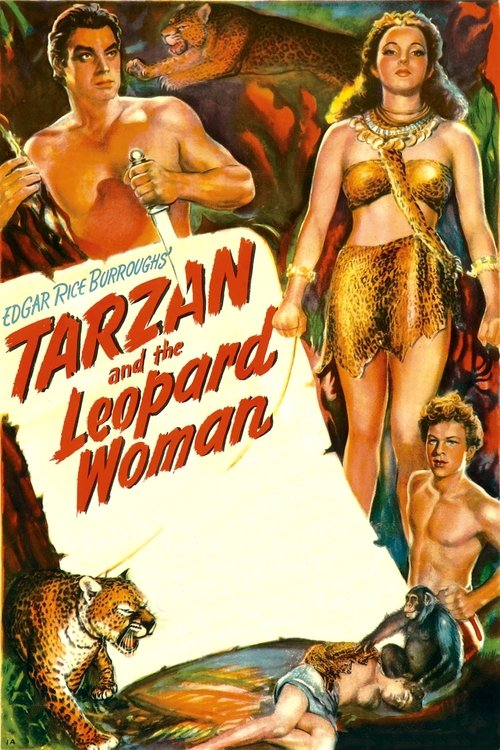
Tarzan and the Leopard Woman
1946
No user ratings available yet
Representation score: 1.0 out of 10
Representation Score
Minimal
1950
ApprovedDirector
George P. Breakston
Runtime
60 minutes
Average Rating
No ratings yetNew Showbiz Analysis
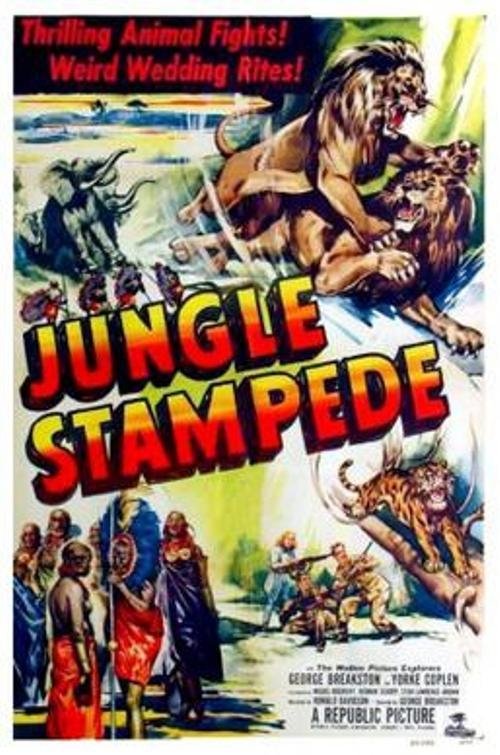
Jungle Stampede is a classic mid-century adventure documentary that centers on the Western explorer narrative. The film's structure frames the journey of George Breakston and Yorke Coplen as a mission to document 'exotic' locales. While the film includes diverse ethnic groups like the Masai and Pygmy tribes, these populations are treated as subjects for a photographic record rather than individuals with their own choices. This approach reinforces a colonialist gaze. Ultimately, the film adheres to traditional social hierarchies of its era, focusing on the safari paradigm and the observation of foreign lands through a strictly Western lens.
Category Breakdown
The film focuses on a traditional masculine expedition and does not include any non-straight relationships or same-sex intimacy.
The film centers on male explorers George Breakston and Yorke Coplen, reinforcing mid-century gender hierarchies by excluding women from key roles.
The film depicts Pygmy and Masai tribes through a colonialist lens, positioning these groups as subjects of observation rather than active agents in their own stories.
The narrative emphasizes Western expeditionary values and the concept of discovery, reinforcing the 'othering' of non-Western cultures through a dominant Western perspective.
There is no depiction of physical or neurodivergent disabilities in the film.
Present on Screen
Limited or Absent
Official Synopsis
While most of the footage is indeed authentic and the safari journey and the reason is real, this is far from being qualified as a documentary since it is filled with stock-footage and staged-incidents to add to the film moments of suspense and/or peril that were not part of the actual expedition, i.e., the camera shows a wild beast stalking the safari with the narrator explaining that the man is unaware that he is being stalked until the animal jumps and kills him. Obvious question would be why didn't the cameraman warn him? The film tells the story of two explorers, George Breakston and Yorke Coplen, setting out to make a photographic record of animal life, and the lives of the tribes they encounter along the way. It is broken up into three segments---the journey from Nairobi to the Land of the Pgymies; the trip from there to the territory of the Masai tribe; and the Masai tribe itself.
1946
1939
1931
1936
1934
1950
1941
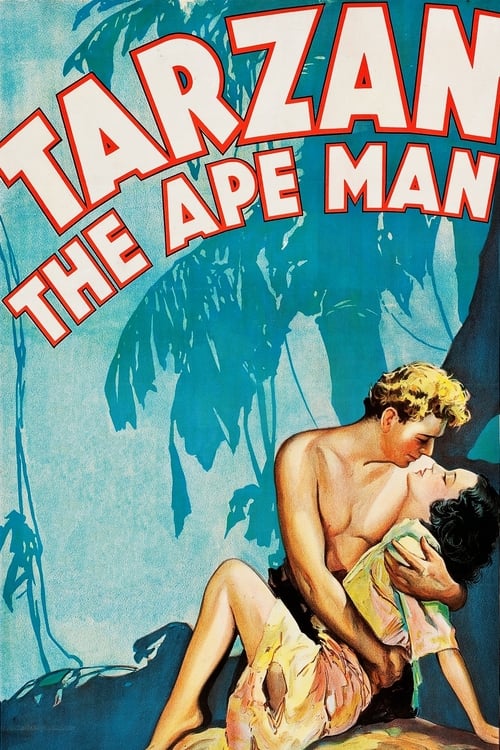
1932
No reviews yet. Be the first to share your thoughts on this movie!
Use the rating form above to leave a star rating and optional review.