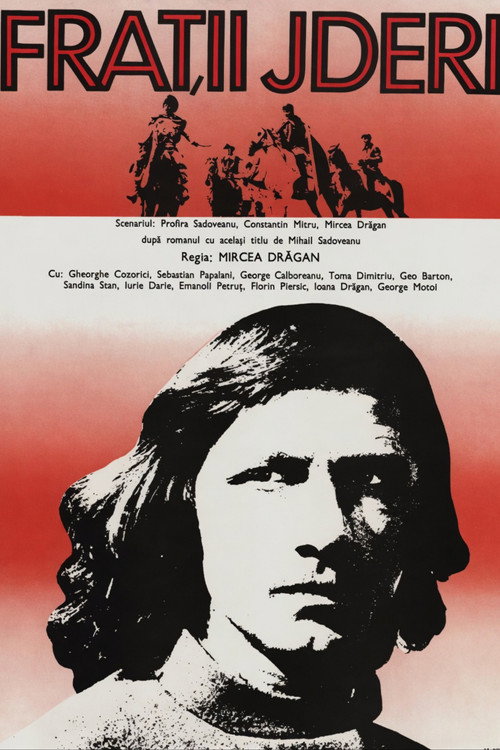
The Martens Brothers
1974
No user ratings available yet
Diversity score: 2.7 out of 10

1986
Not RatedDirector
Lee Doo-yong
Runtime
108 minutes
Average Rating
No ratings yetSynopsis
Jeong-ho is castrated by an ambitious minister for loving above his station. The minister also happens to be the father of Ja-ok, the girl Jeong-ho loved. He sends his daughter to the king as a concubine in a bid to gain favor, but the king sees through his motives and the instead forces Ja-ok into the position of a lowly kitchen maid. Jeong-ho sole hope in life is to save his former lover.
Overall Score
Fair
Category Breakdown
LGBTQ+ Representation
The film focuses on the tragedy of eunuchs as a social class rather than exploring queer identity. Jeong-ho's motivations remain rooted in heteronormative longing for Ja-ok.
Gender Representation
Ja-ok serves primarily as a political pawn within a rigid patriarchal structure. Female characters are often depicted as victims of male ambition rather than autonomous agents.
Racial & Ethnic Diversity
The cast is culturally homogeneous, reflecting the specific Korean historical setting. It offers deep immersion into a non-Western framework without seeking ethnic diversification.
Religious & Cultural Diversity
The story critiques the corruption of traditional institutions and absolute authority. It portrays a world where political survival often overrides familial and moral bonds.
Disability Representation
The protagonist's forced castration is used as a symbol of social marginalization. It functions as a catalyst for suffering rather than a nuanced study of disability.
Strengths
Areas for Improvement
AI Analysis
Eunuch (1986) is a traditional historical tragedy that prioritizes the critique of systemic corruption over the exploration of diverse identities. The film effectively uses the Joseon Dynasty's rigid hierarchies to highlight the cruelty of absolute power and political maneuvering. However, the narrative remains constrained by its period setting. It focuses on individual suffering within a patriarchal framework, offering little room for intersectional depth or character-driven explorations of non-cisnormative identity or neurodivergence. Ultimately, the film succeeds as a study of institutional cruelty but lacks the agency and representation required for a high diversity score.
1974

2019

1991
2008
1934

1939
2017
2015
1995

2003

2005
2009
No reviews yet. Be the first to share your thoughts on this movie!
Use the rating form above to leave a star rating and optional review.