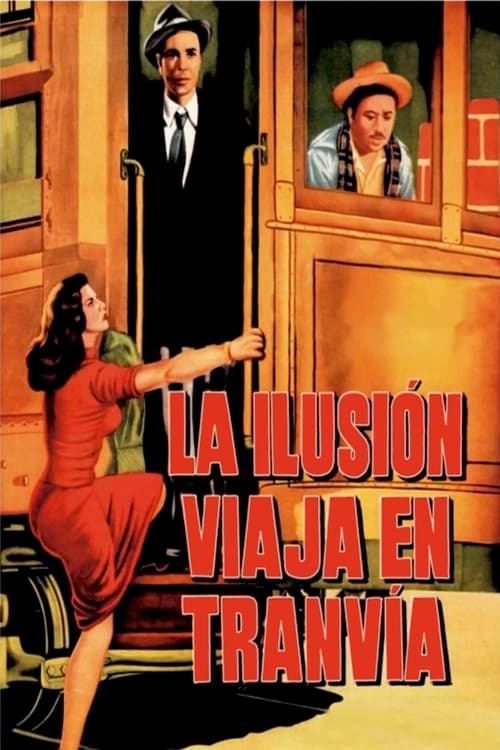
Illusion Travels by Streetcar
1954
No user ratings available yet
Representation score: 3.7 out of 10

Representation Score
Excellent
1952
Director
Luis Buñuel
Runtime
80 minutes
Average Rating
No ratings yetNew Showbiz Analysis
Luis Buñuel’s work stands out for its deconstruction of social hierarchies and its focus on Mexican regional identity. By avoiding Eurocentric viewpoints, the film offers a rich portrayal of mixed and indigenous social strata. However, the film’s surrealist approach often emphasizes visual absurdity over character development. This is evident in the depiction of disability and the absence of explicit LGBTQ+ identities, which limits the depth of representation. Overall, the film serves as a powerful critique of bourgeois morality and institutional stability, using chaos to challenge traditional social structures.
Category Breakdown
The film does not include explicit LGBTQ+ characters or explore non-traditional sexual identities. However, there are hints of fluid desire, but the narrative focuses on traditional gender roles and sexual tension.
Buñuel challenges traditional gender roles by depicting masculinity through absurdity and incompetence. The character Raquel disrupts era-specific gender norms by asserting a bold and disruptive sexual presence.
The cast includes a diverse range of Mexican society, highlighting indigenous and mixed heritage communities. This approach avoids a Eurocentric perspective by emphasizing regional identity.
The film criticizes Western institutions and bourgeois manners through surrealism. It portrays the breakdown of social norms as a form of liberation from artificial civility.
A one-legged man is shown struggling in the mud, serving as a surreal image. Physical disability is used for visual absurdity rather than exploring the lived experience of the disabled.
Present on Screen
Limited or Absent
Official Synopsis
Newlywed Oliverio receives disturbing news that his mother is on her deathbed. He travels to a remote part of Mexico to fetch a lawyer who can sort out her will. Leaving his wife behind, he embarks on a bus ride that’s interrupted by an increasingly absurd series of episodes, including an impromptu birthday celebration; a one-legged man writhing in the mud; come-ons from an insatiable small-town belle, Raquel; and Oliverio’s frequent, Freudian nightmares.
1954
1969

1955

1984
1973
1981

1948

1962
No reviews yet. Be the first to share your thoughts on this movie!
Use the rating form above to leave a star rating and optional review.