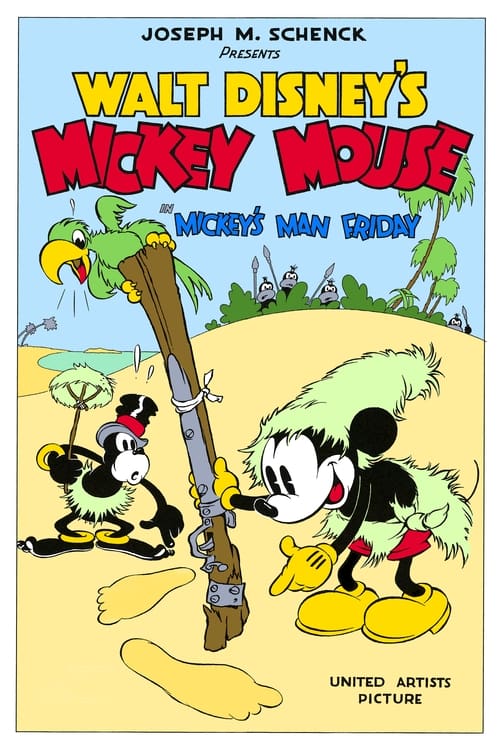
Mickey's Man Friday
1935
No user ratings available yet
Representation score: 1.3 out of 10
Representation Score
Minimal
1931
Director
Wilfred Jackson
Runtime
7 minutes
Average Rating
No ratings yetNew Showbiz Analysis
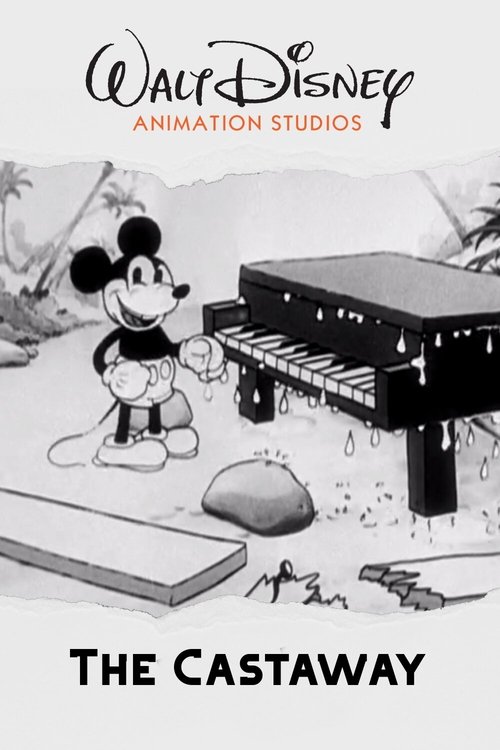
The Castaway primarily showcases rhythmic animation and physical comedy. Its narrative structure revolves around environmental conflict and slapstick humor, limiting its potential for social commentary. By using anthropomorphic characters in a non-specific tropical setting, the film sidesteps explicit human racial or gendered social dynamics. This creates a homogeneous framework reflecting the industry standards of the early 1930s. Overall, the film lacks the intentionality needed to engage with diverse identities. It remains focused on individual survival and moral neutrality, without addressing broader social issues.
Category Breakdown
The film centers on a single protagonist in a survival scenario and does not include any non-straight or non-cisgender identities or same-sex relationships.
Mickey serves as a gender-neutral character within a traditional framework. The lack of female characters means there is no exploration of gender roles or hierarchies.
The animation uses animal-like characters instead of humans, avoiding direct racial identifiers. However, the tropical island setting employs outdated clichés of exotic locales.
The story follows a typical survival arc focused on physical needs and slapstick humor. It does not address systemic issues, secular themes, or complex cultural ideas.
The short does not feature characters with visible or invisible disabilities. Disability is not used as a narrative device or plot point.
Present on Screen
Limited or Absent
Official Synopsis
Mickey, apparently shipwrecked, is on a raft; he washes up on a tropical island, where a banana tree takes care of his hunger. He then discovers a piano that washed ashore, and begins playing it. The animals come around; a gorilla, after playing a 4-hands piece with his feet, destroys the piano. Mickey runs away and accidentally wakes a lion. The lion chases Mickey to a stream, where he jumps onto a rock that turns out to be right next to a crocodile.
1935
1925
1933

1925
1929

1930
1946
1931
No reviews yet. Be the first to share your thoughts on this movie!
Use the rating form above to leave a star rating and optional review.