The Picnic
1930
No user ratings available yet
Diversity score: 2.2 out of 10
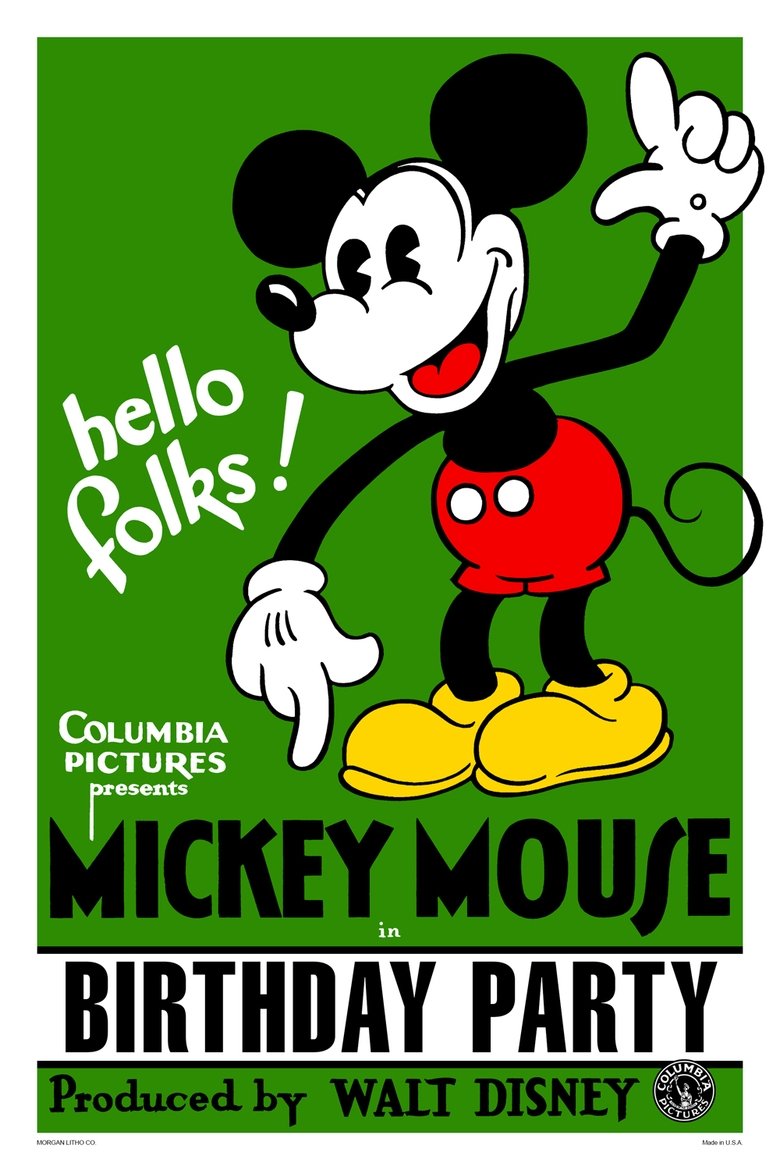
1931
Director
Burt Gillett
Runtime
7 minutes
Average Rating
No ratings yetSynopsis
Mickey's friends throw him a surprise birthday party at Minnie's house. The chef brings out the cake (with 2 candles); Mickey manages to blow all the cake onto the chef's face, while the candles stay lit. He unwraps his present: a miniature piano. He plays a duet of I Can't Give You Anything But Love, Baby with Minnie, followed by an instrumental version of The Darktown Strutter's Ball, which everyone dances to (including Mickey and Minnie, while the piano stools keep playing). Mickey then plays There's No Place Like Home on the xylophone, then accompanies Minnie on another piece, after which the xylophone gets frisky and eventually dumps Mickey in the fish bowl.
Overall Score
Limited
Category Breakdown
LGBTQ+ Representation
The film centers on the established romantic bond between Mickey and Minnie. It operates strictly within a heteronormative framework, reinforcing traditional romantic tropes without any non-cisnormative identities.
Gender Representation
Characters follow conventional social scripts and gender roles. Minnie occupies a domestic space while the characters engage in collaborative musical activities that reinforce traditional archetypes.
Racial & Ethnic Diversity
The cast uses anthropomorphic abstraction, yet the musical selection invokes racialized cultural histories. The film lacks explicit character diversity or intentional intersectional breadth.
Religious & Cultural Diversity
The narrative celebrates traditional Western values of domesticity and friendship. It promotes social cohesion through a conventional celebration of a nuclear social unit.
Disability Representation
No characters are depicted with visible or invisible disabilities. Slapstick mishaps, such as Mickey falling into a fishbowl, are presented as comedic physical accidents.
Strengths
Areas for Improvement
AI Analysis
The film is a product of its 1931 temporal context, prioritizing slapstick comedy and the reinforcement of established social norms. It functions as a foundational piece of animation that relies on traditional character archetypes rather than intersectional storytelling. While the musical elements connect to specific historical traditions, the narrative lacks the intentionality required to disrupt hierarchies. The representation remains centered on conventional Western social structures and heteronormative romantic pairings.
1930
1930
1934

1931
1930
1930
1931
1938
1931
1929
1931
1932
No reviews yet. Be the first to share your thoughts on this movie!
Use the rating form above to leave a star rating and optional review.