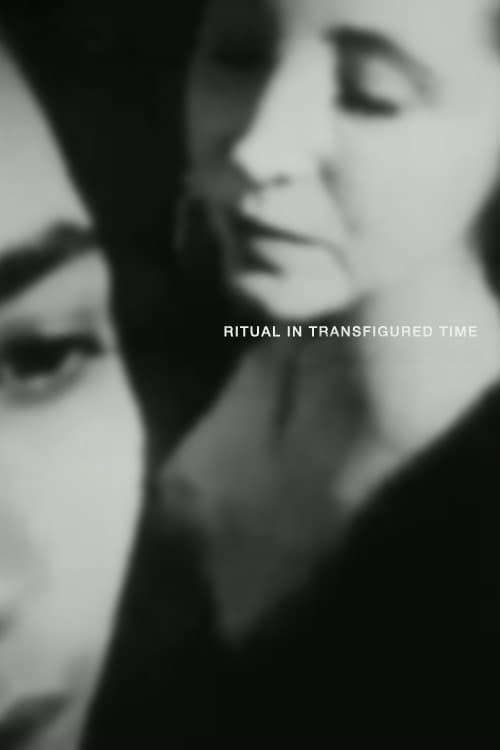
Ritual in Transfigured Time
1946
No user ratings available yet
Diversity score: 2.9 out of 10

1944
Director
Maya Deren
Runtime
15 minutes
Average Rating
No ratings yetSynopsis
A woman washes up on a beach and embarks on a surreal journey, encountering others and fragmented versions of herself in a quest for identity.
Overall Score
Limited
Category Breakdown
LGBTQ+ Representation
The film operates within an abstract, non-narrative framework. It lacks explicit depictions of queer identity or non-cisnormative social dynamics.
Gender Representation
The narrative centers exclusively on a female protagonist. She possesses total agency over her movement, disrupting conventional mid-century cinematic expectations of passive female roles.
Racial & Ethnic Diversity
The film focuses on a singular protagonist navigating natural landscapes. There is no evidence of a diverse cast or racialized social dynamics.
Religious & Cultural Diversity
The work exhibits secularism by stripping away institutional signifiers like religion or family. It avoids traditional Western institutions by creating a vacuum of social context.
Disability Representation
There are no depictions of physical or neurodivergent disabilities. No characters have identities defined by medical or sensory conditions.
Strengths
Areas for Improvement
AI Analysis
Maya Deren’s *At Land* is a formalist experiment that prioritizes rhythmic movement and spatial deconstruction over social or character-driven narratives. Because the film intentionally avoids interpersonal and political dimensions, it lacks the framework necessary for traditional demographic representation. While the film lacks diversity in terms of cast or identity politics, it offers a unique perspective on gender. By centering a female protagonist in a surreal, non-domestic landscape, it grants her a level of agency rarely seen in 1940s cinema. Ultimately, the work functions as a phenomenological study of the body rather than a social portrait. Its value lies in its radical cinematic language rather than its engagement with intersectional identities.
1946
1945

1929
1903

1899
1970

1949
1897
1899

1981
1958

1907
No reviews yet. Be the first to share your thoughts on this movie!
Use the rating form above to leave a star rating and optional review.