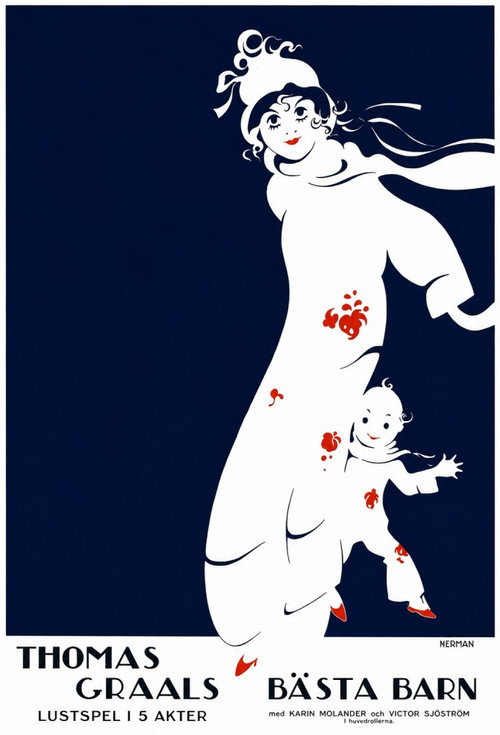
Thomas Graal's Best Child
1918
No user ratings available yet
Diversity score: 3.7 out of 10
No Poster Available
1917
Director
Mauritz Stiller
Runtime
60 minutes
Average Rating
No ratings yetSynopsis
Thomas Graal's a screenwriter, is very fond of his secretary Bessie. Overtaken by a kiss by Thomas she runs away. In his misfortune Thomas writes a screenplay inspired by Bessie. But she has not been really honest with him. 31 minutes of runtime are missing and presumed lost.
Overall Score
Limited
Category Breakdown
LGBTQ+ Representation
The narrative focuses on heterosexual romantic tension between a screenwriter and his secretary. No evidence of queer subtext or non-cisnormative identities exists in the surviving records.
Gender Representation
Bessie possesses significant agency, disrupting the male lead's expectations by fleeing after an unwanted advance. Her actions drive the plot, moving her beyond a passive object of the male gaze.
Racial & Ethnic Diversity
The film reflects the homogeneous social structures of 1917 Sweden. There is no indication of a diverse cast or non-Anglo-Saxon majority ensembles in the synopsis.
Religious & Cultural Diversity
The story explores themes of subjective truth and the blurred lines between reality and art. It leans toward moral relativism through the protagonist's struggle with a woman's true character.
Disability Representation
There is no documented evidence regarding the portrayal of physical or neurodivergent characters in the available historical records.
Strengths
Areas for Improvement
AI Analysis
Mauritz Stiller’s 1917 comedy offers a glimpse into early Swedish cinema, characterized by the social homogeneity of its era. While the film lacks modern intersectional diversity, it avoids the era's typical trap of making female characters purely submissive. The strength of the work lies in its character dynamics, particularly the agency shown by Bessie. However, the film is limited by the demographic constraints of early 20th-century European production, offering little in the way of racial or LGBTQ+ representation. Ultimately, the film serves as a period piece that subverts some gendered passivity while remaining firmly rooted in the era's conventional social structures.
1918
1929
1925
1919
1920
1928
1929
1928
1903
1925
1916
1938
No reviews yet. Be the first to share your thoughts on this movie!
Use the rating form above to leave a star rating and optional review.