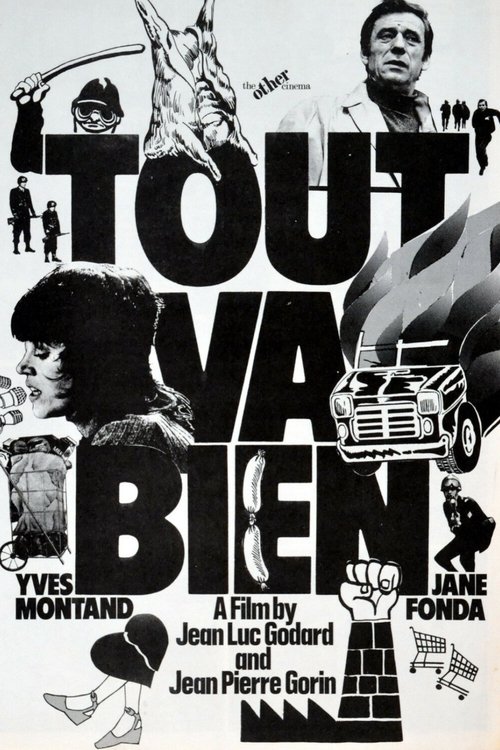
Tout Va Bien
1972
No user ratings available yet
Representation score: 6.8 out of 10
Representation Score
Fair
1975
Director
Jean-Luc Godard
Runtime
88 minutes
Average Rating
No ratings yetNew Showbiz Analysis
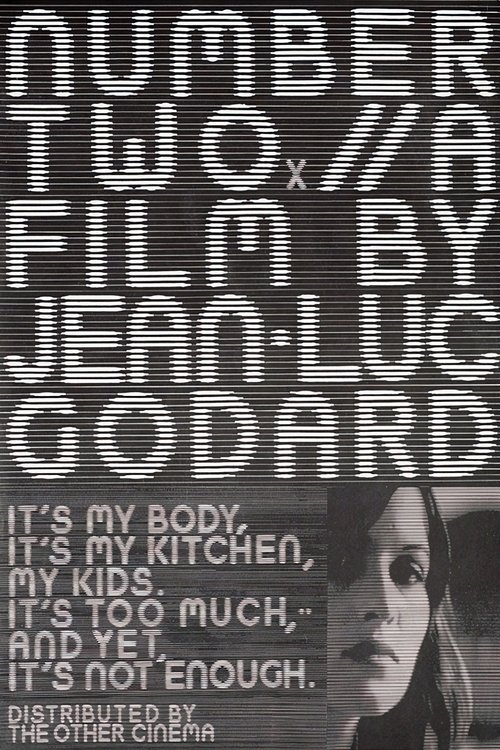
Jean-Luc Godard’s *Number Two* is a formalist experiment that prioritizes the deconstruction of social structures over explicit identity politics. It uses a dual-monitor format to explore the alienation of modern, working-class life. The film challenges the idealized nuclear family by focusing on marital discord and the breaking of domestic norms. However, it remains limited by a lack of visible diversity regarding race and sexual orientation. Ultimately, the work serves as a critique of institutional power and capitalist environments, using fragmented storytelling to subvert traditional narrative and moral certainties.
Category Breakdown
The film does not explicitly confirm any queer identities or include non-straight relationships. The focus on a working-class couple in the 1970s suggests a traditional pairing typical of the era.
By highlighting a wife's infidelity, the film challenges traditional views of female domesticity. This approach presents a complex view of gender power dynamics rather than a submissive female character.
While the high-rise setting hints at a diverse urban environment, there are no specific details about the racial or ethnic makeup of the cast.
The film strongly critiques capitalist urban living through its claustrophobic setting. Godard’s experimental techniques and focus on marital discord emphasize moral relativism over traditional social structures.
There is no indication of characters with visible or invisible disabilities in the narrative or the director's profile.
Present on Screen
Limited or Absent
Official Synopsis
Jean-Luc Godard mixes video and film in his Grenoble studio, discussing how he secured funding for the film. The action unfolds on two monitors, as a young working-class couple lives in a claustrophobic, high-rise apartment complex and marital discord is set off by the wife’s infidelity.
1972

1967

1963

1964

1980
1981

1962
1982
No reviews yet. Be the first to share your thoughts on this movie!
Use the rating form above to leave a star rating and optional review.