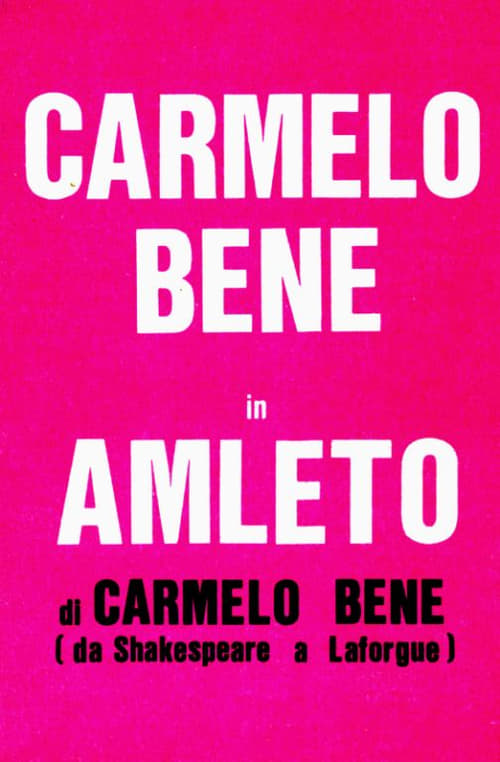
Amleto di Carmelo Bene (da Shakespeare a Laforgue)
1978
No user ratings available yet
Representation score: 7.8 out of 10

Representation Score
Fair
1973
Director
Carmelo Bene
Runtime
70 minutes
Average Rating
No ratings yetNew Showbiz Analysis
Carmelo Bene’s avant-garde approach deconstructs Shakespearean tradition to prioritize psychological abstraction over classical storytelling. The film succeeds in challenging gendered expectations and institutional hierarchies, moving away from the domestic roles typically assigned to female characters. However, the film lacks measurable data regarding racial or ethnic diversity. The narrative remains centered on a European, psychoanalytic framework that does not explicitly address these dimensions of diversity. Ultimately, the film is a study in structural subversion. It trades traditional romantic and political clichés for a postmodern exploration of individual autonomy and intellectual pursuit.
Category Breakdown
The film challenges the assumption that everyone is straight or cisgender by focusing on Hamlet's relationship with Ophelia through detachment rather than romantic pursuit. Although specific same-sex intimacy is not detailed, the emphasis on psychological alienation suggests a departure from typical romantic narratives.
Ophelia is portrayed as a doll-like figure, critiquing the conventional romanticization of femininity. The character Kate offers Hamlet a path toward professional and intellectual companionship, providing a shift toward greater involvement and influence.
There is insufficient evidence to evaluate racial or ethnic diversity within this European dramatic framework. The narrative focuses primarily on psychological and philosophical deconstruction.
The work critiques traditional monarchy and familial duty by prioritizing subjective experience over state affairs. It uses psychoanalysis to reframe the narrative, favoring individualistic paths over established social hierarchies.
There is no evidence regarding the presence of characters with visible or invisible disabilities. The focus remains on the protagonist's psychological state.
Present on Screen
Limited or Absent
Official Synopsis
The Prince of Denmark, Hamlet, is little interested in family affairs and the fate of the kingdom, and not at all attracted by a doll-like Ophelia sucking his finger. Annoyed by his friend Horatio, who tells him of the apparition of his father's spectre that would like to drive him to revenge, and by Polonius, Ophelia's father, who psychoanalyses him by explaining the Oedipus complex, he imagines escaping to Paris with Kate, the leading actress of the company performing in Elsinore, to become a playwright.
1978

1969

1976

1972

2003
1968
1999

1969
No reviews yet. Be the first to share your thoughts on this movie!
Use the rating form above to leave a star rating and optional review.