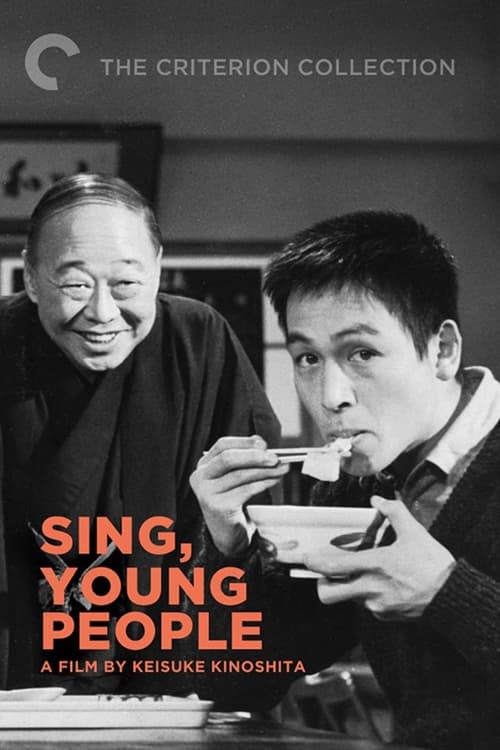
Sing, Young People!
1963
No user ratings available yet
Diversity score: 4.8 out of 10
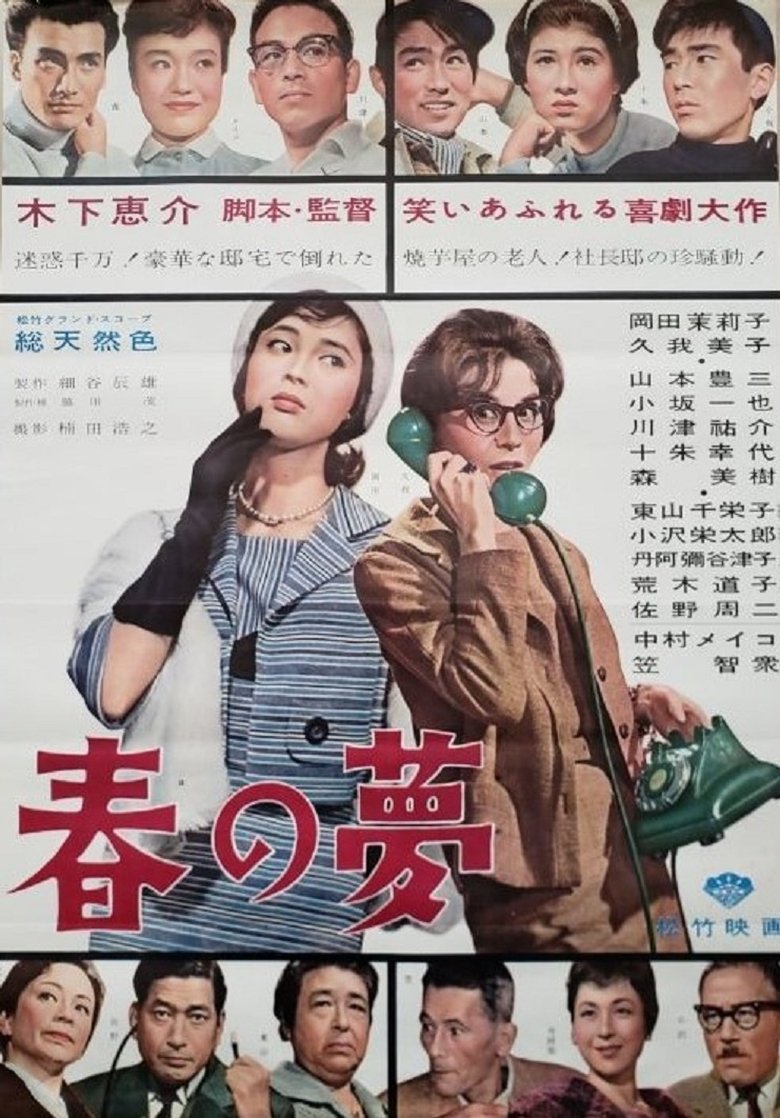
1960
Director
Keisuke Kinoshita
Runtime
103 minutes
Average Rating
No ratings yetSynopsis
When a wealthy, selfish family decides to take care of an elderly hobo who collapsed near their home, they are beset by visits from his numerous friends.
Overall Score
Fair
Category Breakdown
LGBTQ+ Representation
The film lacks explicit evidence of LGBTQ+ characters or non-heteronormative identities. The narrative focus remains centered on class-based social interactions rather than sexual identity politics.
Gender Representation
The story suggests a potential disruption of domestic hierarchies through the interaction between a wealthy family and an outsider. Female characters in Kinoshita's work often possess psychological depth that challenges patriarchal structures.
Racial & Ethnic Diversity
As a 1960 Japanese production, the film depicts a culturally homogeneous society. It explores internal societal divisions by using the elderly hobo as a social outcast to examine 'othering.'
Religious & Cultural Diversity
The film critiques the moral superiority of the upper class by centering on a selfish family disrupted by a marginalized figure. It highlights communal, non-capitalist bonds over rigid institutional structures.
Disability Representation
The premise involves an elderly man who has collapsed, touching on themes of physical vulnerability. Kinoshita's humanist tradition suggests a nuanced portrayal of the elderly rather than mockery.
Strengths
Areas for Improvement
AI Analysis
Spring Dreams serves as a poignant social critique of class and institutional selfishness. It uses the disruption of a wealthy household by a marginalized outsider to challenge the stability of social hierarchies. While the film lacks modern intersectional markers like explicit LGBTQ+ representation or multi-ethnic casting, it finds depth in its exploration of social outcasts. The narrative elevates the vulnerable to a position of influence over the dominant class. Ultimately, the film's strength lies in its humanist approach to class dynamics and the psychological complexity of its characters within a mid-century Japanese context.
1963
1957

1999

1971

2012

1999

1985

1996

1943

1932
1949

1955
No reviews yet. Be the first to share your thoughts on this movie!
Use the rating form above to leave a star rating and optional review.