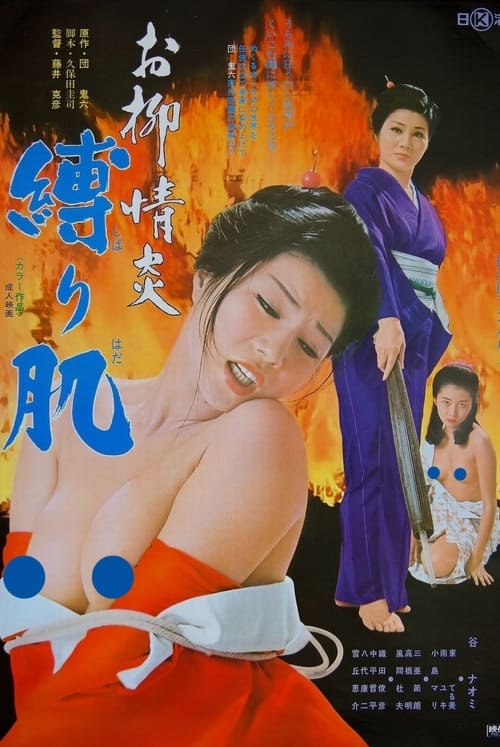
Oryu's Passion: Bondage Skin
1975
No user ratings available yet
Representation score: 5.9 out of 10
Representation Score
Limited
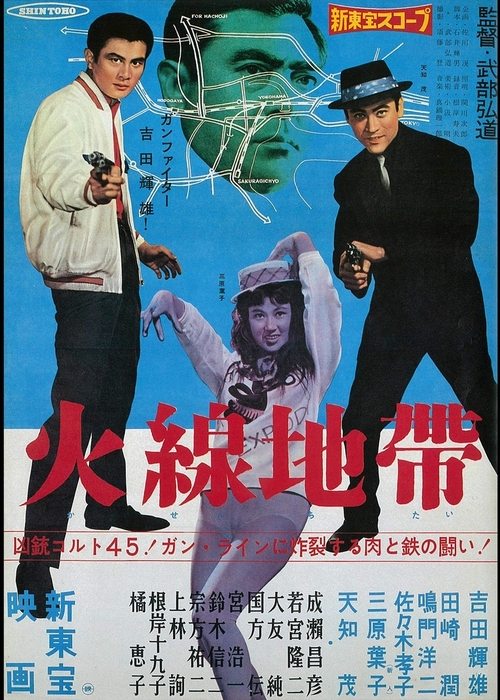
1961
Director
Hiromichi Takebe
Runtime
79 minutes
Average Rating
No ratings yetNew Showbiz Analysis
Fire Line is a mid-century Japanese noir that closely follows the genre conventions of its time. The narrative emphasizes masculine power dynamics and traditional criminal hierarchies, offering little in the way of social subversion. The film offers a glimpse into the underworld of 1961 Japan, focusing on individual ambition and betrayal within a yakuza syndicate. However, it maintains a conventional social structure. Overall, the film lacks depth in representing diverse identities, focusing its conflict on male protagonists and heterosexual romantic entanglements. It reflects the social norms of its production period without disrupting them.
Category Breakdown
The story focuses on heterosexual romance, particularly the protagonist's involvement with a boss's girlfriend. There are no characters with non-binary or transgender identities.
The plot revolves around male-driven power struggles and criminal activities. Female characters are primarily defined by their relationships to men, such as being the boss's girlfriend.
With a cast reflecting the homogeneous demographics of 1961 Japan, the film does not include characters from different racial backgrounds. It portrays the society of its time without challenging racial hierarchies.
The film delves into the underworld of the Shigemori Syndicate, depicting systemic corruption within the context of Japanese crime dramas. It adheres to the established social frameworks of its genre without questioning them.
There are no characters with visible or invisible disabilities mentioned in the narrative.
Present on Screen
Limited or Absent
Official Synopsis
Two young crooks who scam betters in the race track are employed by a yakuza gang called the Shigemori Syndicate to steal a shipment of handguns from a rival gang. Somewhere in the process they find themselves on the run from their own gang and one of them becomes himself romantically entangled with the boss's girlfriend. An ambitious underboss of the gang offers them a way out if they murder the previous boss but things don't turn out as planned (for everyone).
1975
1966
1960

1964
1971
1974

1978
1963
No reviews yet. Be the first to share your thoughts on this movie!
Use the rating form above to leave a star rating and optional review.