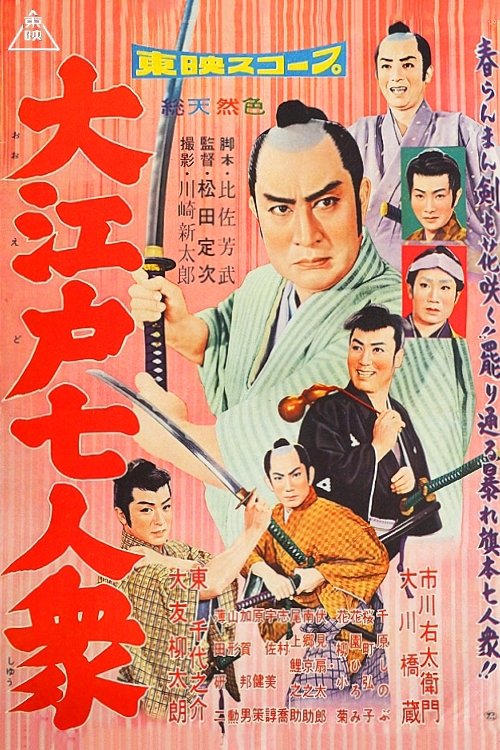
Seven from Edo
1958
No user ratings available yet
Diversity score: 3.1 out of 10
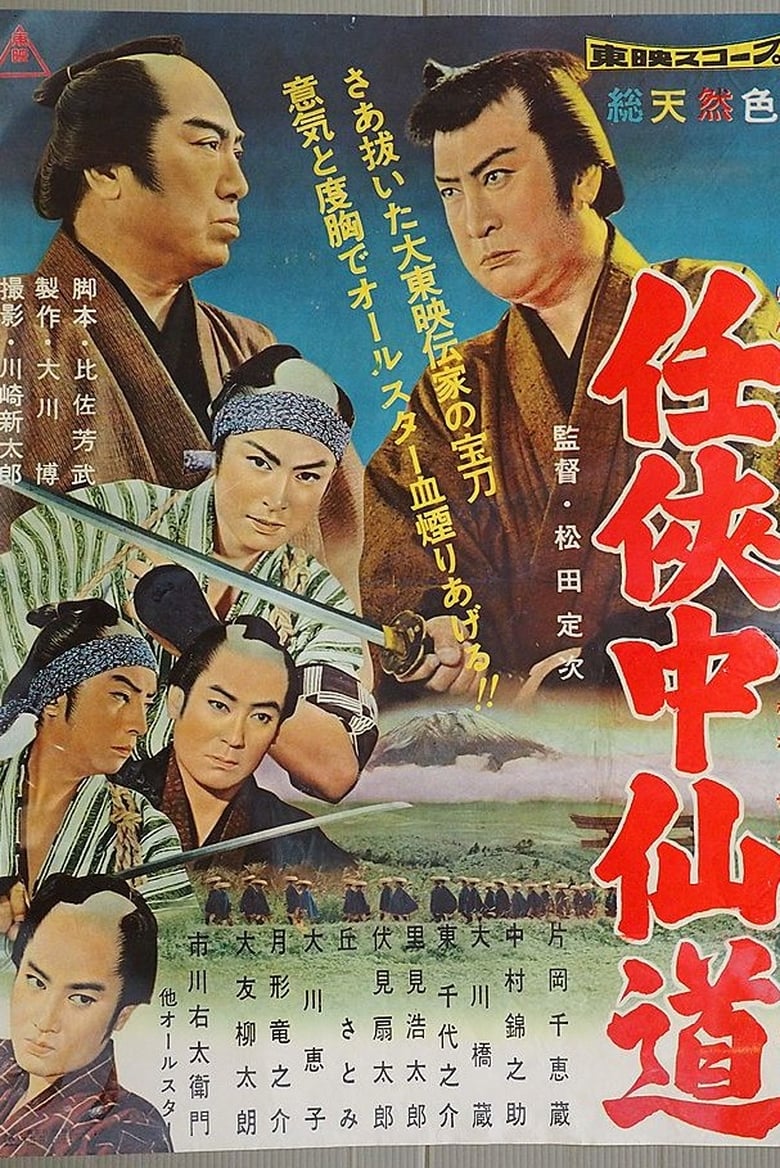
1960
Director
Sadatsugu Matsuda
Runtime
91 minutes
Average Rating
No ratings yetSynopsis
While on the road, famed Yakuza Boss Jirocho is falsely accused of starting a peasant's uprising and chased by the law. Meanwhile, one of his henchmen in an attempt to raise money for the Boss gambles away not only all their funds, but their clothing as well. Jirocho, famed for his honesty and integrity must take on the challenge of rival gangs while trying to elude the government's officials at the same time. Things really heat up when the most famous of all Yakuza Bosses, Chuji of Kunisada gets involved. Will he team up with his old friend or is gang warfare about to erupt?
Overall Score
Limited
Category Breakdown
LGBTQ+ Representation
The film focuses on traditional Yakuza hierarchies and masculine bonds. There is no evidence of non-cisnormative gender identities or depictions of same-sex intimacy.
Gender Representation
The narrative architecture centers on male-dominated power structures. Agency is concentrated in male bosses and henchmen, leaving little room for the subversion of masculine leadership.
Racial & Ethnic Diversity
This period-specific Japanese production focuses on domestic social dynamics. The narrative appears to focus on a homogeneous ethnic group without evidence of racial blending.
Religious & Cultural Diversity
The film explores themes of honesty and integrity within the criminal underworld. It focuses on internal morality and interpersonal loyalties rather than systemic critiques.
Disability Representation
There is no mention of characters with visible or invisible disabilities in the narrative.
Strengths
Areas for Improvement
AI Analysis
Road of Chivalry is a traditional genre piece that adheres to the social and narrative constraints of 1960s Japanese crime cinema. The story prioritizes established hierarchies of masculinity and honor, centering on the internal codes of the Yakuza underworld. Because the plot revolves around gang warfare and the leadership of figures like Jirocho and Chuji, the film maintains a conventional approach to social structures. It offers limited agency to marginalized identities, focusing instead on the interpersonal loyalties of a homogeneous male group. Ultimately, the film functions as a study of mid-century genre tropes. It emphasizes domestic social dynamics and traditional criminal codes rather than intersectional storytelling or diverse representation.
1958
1969
1968
1994
1960
1948
1970
2016
1974
1990
1968
2018
No reviews yet. Be the first to share your thoughts on this movie!
Use the rating form above to leave a star rating and optional review.