
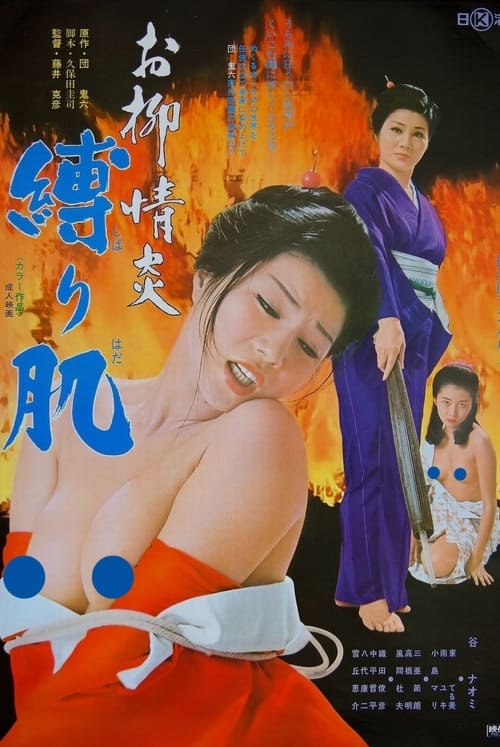
Rope Hell
1978
No user ratings available yet
Representation score: 5.2 out of 10
Representation Score
Fair
1975
Director
Katsuhiko Fujii
Runtime
76 minutes
Average Rating
No ratings yetNew Showbiz Analysis
Oryu's Passion: Bondage Skin stands out for its subversion of traditional gender roles. By placing a female protagonist in a male-dominated yakuza structure, the film challenges passive stereotypes with decisive female action. While the film excels in gender representation, it remains limited by its 1920s Japanese setting, which results in a lack of LGBTQ+ and racial diversity. The film focuses on a culturally specific, homogeneous environment. Ultimately, the film's strength lies in its critique of traditional institutional stability and patriarchal leadership, even as it operates within the social constraints of its time.
Category Breakdown
The film does not include any explicit references to LGBTQ+ identities or non-straight relationships. It focuses on traditional romantic dynamics within the yakuza hierarchy.
Oryu plays a central role in driving the plot, contrasting with the ineffective male leadership focused on romance. She takes charge of her own fate, challenging traditional gender roles.
Set in 1920s Osaka, the film features a culturally homogeneous Japanese cast. While it provides a rich historical context, it lacks the multi-ethnic diversity seen in contemporary films.
The story critiques patriarchal succession by showing the collapse of a yakuza clan. It delves into personal morality through Oryu's quest for revenge, rather than adhering to strict legal justice.
There are no visible or hidden disabilities depicted among the characters in this narrative.
Present on Screen
Limited or Absent
Official Synopsis
When the boss of a yakuza clan in 1920s Osaka is assassinated, Oryu, his mistress, vows revenge. Her search for the killer takes her out of the city. The old boss' son proves a poor leader, only interested in Omitsu, his high-class girlfriend. Yajima, the second-in-command, is taking advantage of the situation to accumulate power for himself...
1978
1979

1998

1973

2003

1974

1971
1982
No reviews yet. Be the first to share your thoughts on this movie!
Use the rating form above to leave a star rating and optional review.