
Peacemaker Kurogane: Belief
2018
No user ratings available yet
Representation score: 4.0 out of 10
Representation Score
Good
2024
Director
Fumihiko Sori
Runtime
149 minutes
Average Rating
No ratings yetNew Showbiz Analysis
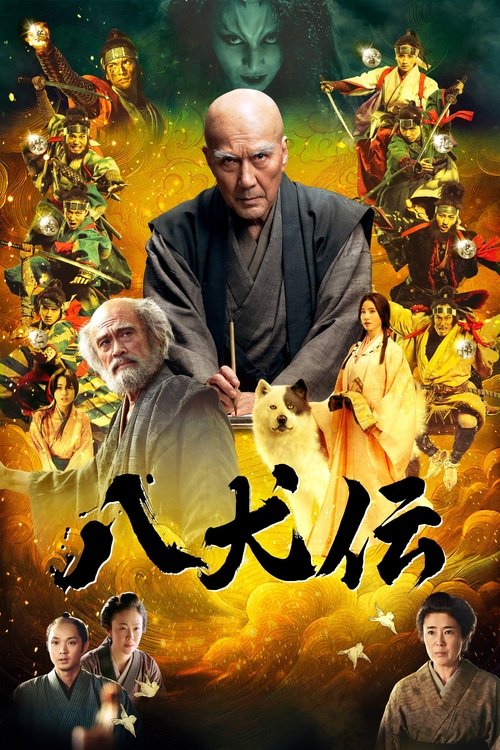
Hakkenden is a character-driven historical drama that excels in its nuanced portrayal of human vulnerability. By focusing on a creator facing physical decline, the film avoids superficial clichés and presents a dignified perspective on disability and legacy. Despite its culturally homogeneous setting, the film challenges traditional hierarchies. A female character's crucial role in completing the narrative shifts the power dynamics. However, the film lacks explicit LGBTQ+ representation, limiting its exploration of interpersonal complexity to subtext. Its primary focus is on individual perseverance within a specific historical and cultural framework.
Category Breakdown
The film does not explicitly depict LGBTQ+ identities. However, the strong bond between Bakin and Hokusai hints at possible non-traditional dynamics, though no queer identities are clearly defined.
A daughter-in-law plays a pivotal role by proposing a solution that ensures the story's continuation, disrupting the patriarchal structure typical of the Edo-period setting.
The cast is ethnically uniform, reflecting the historical Japanese context. The film delves into Japanese cultural identity and the blend of myth and reality.
The narrative adheres to traditional moral frameworks, rewarding good and punishing evil. It emphasizes the subjective struggle of the artist over rigid, didactic storytelling.
Bakin’s gradual loss of sight creates a central narrative tension. The film handles his sensory decline with dignity, focusing on his persistence and ability to act rather than tragedy.
Present on Screen
Limited or Absent
Official Synopsis
Takizawa Bakin, a popular Edo period author, begins to recount a story he is planning in front of his friend, the artist Katsushika Hokusai. The story is about eight warriors who, each carrying a jewel, gather together as if guided by fate and embark on a harsh journey to fight the curse of the Satomi family. Hokusai is drawn into the story that Bakin is telling, and visits Bakin on various occasions to hear the rest of the story, and a strange relationship between the two begins. The serialization becomes Bakin's life's work, with the idea of "rewarding good and punishing evil in a world where evil is rampant," but after 28 years, as the story finally approaches its climax, Bakin begins to lose his sight. With the completion of the story in doubt, he receives an unexpected proposal from his daughter-in-law. Will the story ever be completed?
2018
1997
2025
1953
2012
2017
2001
2010
No reviews yet. Be the first to share your thoughts on this movie!
Use the rating form above to leave a star rating and optional review.