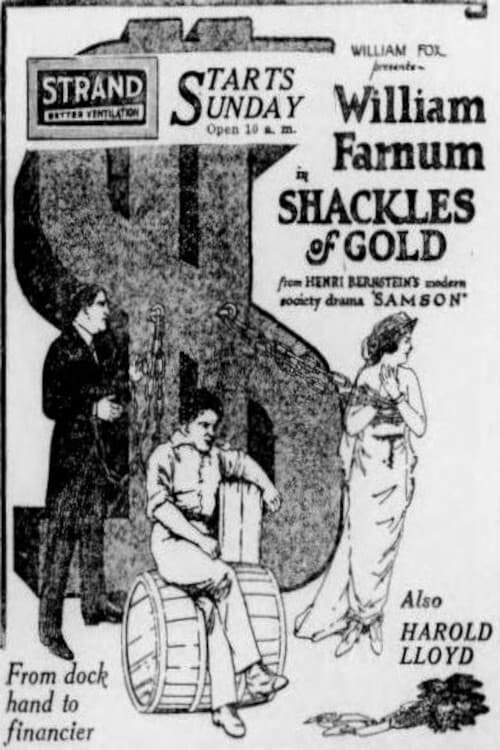
Shackles of Gold
1922
No user ratings available yet
Representation score: 1.3 out of 10
Representation Score
Minimal
1926
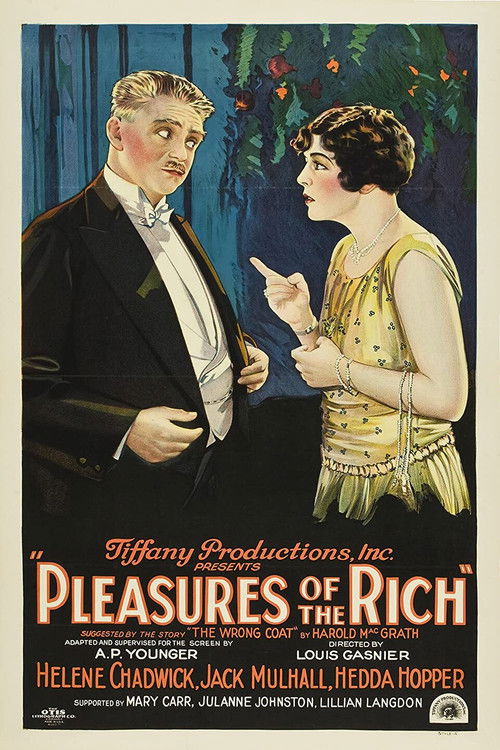
PassedDirector
Louis J. Gasnier
Runtime
70 minutes
Average Rating
No ratings yetNew Showbiz Analysis
Pleasures of the Rich is a conventional silent-era melodrama that reinforces the social and romantic hierarchies of the 1920s. The narrative focuses on individual romantic ability to act within established class and marital structures rather than offering systemic critique. The film's primary drivers are wealth acquisition and social maneuvering. While it touches on the transition from poverty to riches, it does so through a lens of traditional melodrama rather than progressive social commentary. Ultimately, the work lacks multi-layered complexity, remaining firmly within the standard genre conventions and casting practices of its era.
Category Breakdown
The film does not include any characters with non-binary gender identities or same-sex relationships. The plot follows traditional heterosexual romantic structures.
Mona Vincent plays a significant role in driving the story through her strategic negotiations, yet the plot remains driven by standard romantic melodrama clichés. Power dynamics are based on marital status and social standing.
The narrative centers on a homogeneous social class with no indication of diverse ethnic identities or a non-Anglo-Saxon majority cast.
The story explores class mobility and the moral complexities of divorce through traditional moral frameworks. It adheres to conventional Western institutions without critique.
There is no mention of characters with visible or invisible disabilities.
Present on Screen
Limited or Absent
Official Synopsis
Henry Wilson, a wealthy grocer who started with a pushcart and worked his way up to 40 trucks, although married becomes interested in divorcee Mona Vincent, who is trying to win Frank Clayton, a wealthy scion with whom Wilson's daughter Mary is in love. Mona promises Mary to give up Wilson if Mary will give her Clayton.
1922
1958

1929
1923
1921
1927
1932

1928
No reviews yet. Be the first to share your thoughts on this movie!
Use the rating form above to leave a star rating and optional review.