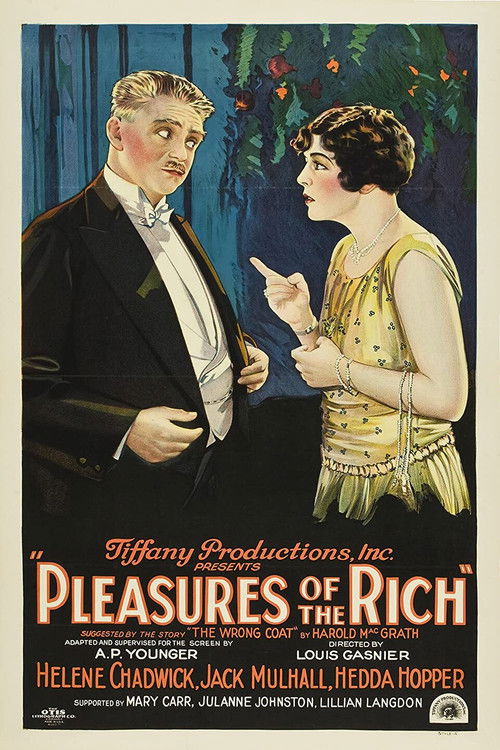
Pleasures of the Rich
1926
No user ratings available yet
Diversity score: 2.6 out of 10
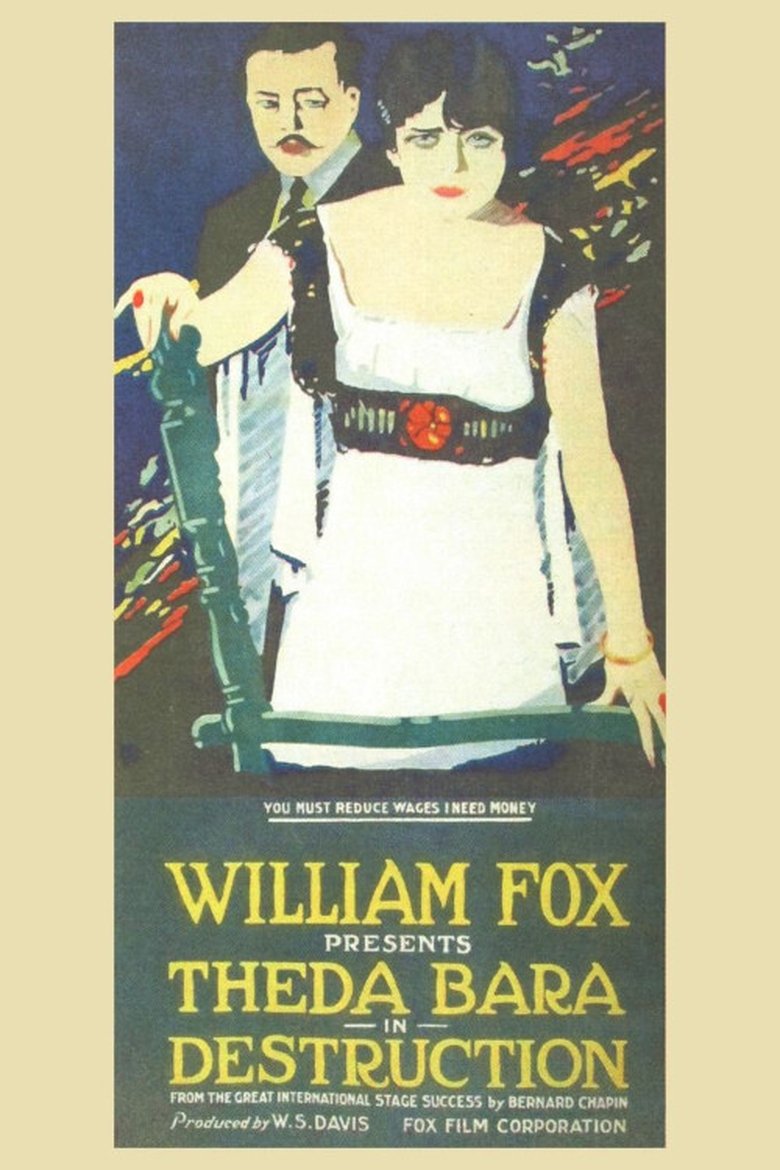
1915
PassedDirector
Will S. Davis
Runtime
50 minutes
Average Rating
No ratings yetSynopsis
Fernande marries a man and schemes to get his wealth when his expected death occurs. But he dies before he can change his will. She next tries to kill the son who inherits, but he outfoxes her.
Overall Score
Limited
Category Breakdown
LGBTQ+ Representation
The film focuses on a traditional heterosexual marriage and inheritance dispute. There is no evidence of non-cisnormative identities or same-sex intimacy.
Gender Representation
Fernande drives the plot with significant agency as a scheming protagonist. However, her character follows the predatory femme fatale archetype common in early cinema.
Racial & Ethnic Diversity
The film likely adheres to the homogeneous casting standards of the 1915 silent era. There is no indication of ethnic blending or diverse casting.
Religious & Cultural Diversity
The narrative reinforces established social and legal institutions. It uses themes of greed and morality to uphold traditional justice through the protagonist's defeat.
Disability Representation
The film provides no information regarding characters with physical or neurodivergent disabilities.
Strengths
Areas for Improvement
AI Analysis
Destruction is a product of its era, utilizing standard melodramatic tropes to explore greed and deception. While the film features a female lead with high narrative agency, her actions are framed within a moralistic cautionary tale that reinforces conventional social hierarchies. The production reflects the homogeneous casting and heteronormative constraints typical of 1915 cinema. It lacks intentional subversion of systemic structures, focusing instead on a traditional struggle over wealth and inheritance. Ultimately, the film serves to uphold established legal and familial structures rather than critiquing them.
1926

1929

1932
1927
1926

1936
1933

1921
1953

1924

1926
1918
No reviews yet. Be the first to share your thoughts on this movie!
Use the rating form above to leave a star rating and optional review.