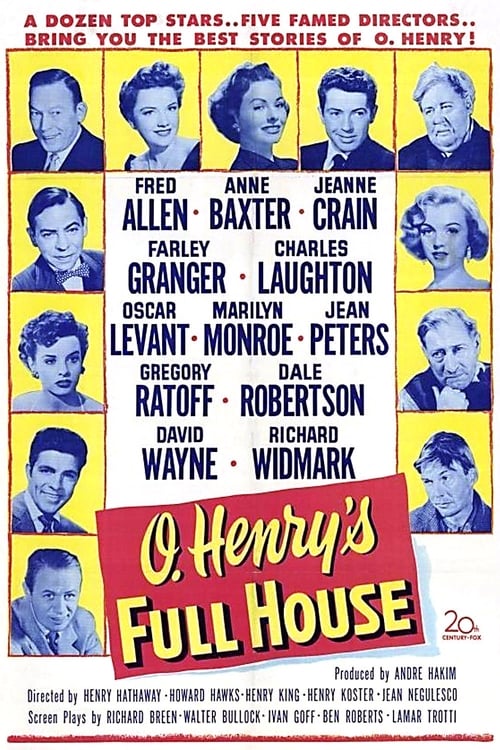
O. Henry's Full House
1952
No user ratings available yet
Representation score: 2.0 out of 10
Representation Score
Limited
1951
Director
Harold French, Anthony Pelissier, Pat Jackson
Runtime
89 minutes
Average Rating
No ratings yetNew Showbiz Analysis
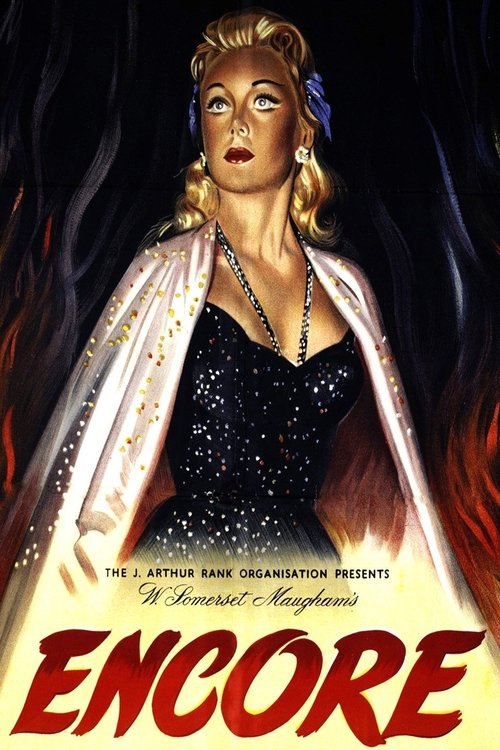
Encore is a product of the early 1950s British studio system, emphasizing conventional storytelling and established social norms. The anthology format, based on W. Somerset Maugham's stories, focuses on human frailty through a lens of traditional morality. The film offers minimal disruption to the era's demographic homogeneity. It lacks representation for LGBTQ+ individuals, diverse ethnic groups, and characters with disabilities who have meaningful ability to act. Ultimately, the work reflects the rigid social hierarchies and cultural frameworks of its time, providing a standard mid-century cinematic experience.
Category Breakdown
The film does not include explicit LGBTQ+ identities or non-straight relationships. It follows the strict censorship rules of the 1950s, which did not allow for the depiction of queer identities.
The narrative structures likely reinforce traditional gender roles. Female characters tend to fill standard domestic or romantic roles rather than driving the plot through intellectual or physical strength.
The cast and setting reflect a homogeneous Anglo-Saxon population typical of 1951 British cinema. There is no indication of diverse ethnic perspectives or actors playing roles outside their traditional backgrounds.
The stories align with mid-century Western social values and traditional morality. The film operates within established social institutions without presenting secular or anti-Western critiques.
Characters with disabilities lack documented ability to act. During this era of filmmaking, disability often serves as a secondary plot device rather than a central part of identity.
Present on Screen
Limited or Absent
Official Synopsis
Encore is a 1951 anthology film composed of adaptations of three short stories by W. Somerset Maugham: "The Ant and the Grasshopper", directed by Pat Jackson and adapted by T. E. B. Clarke; "Winter Cruise", helmed by Anthony Pelissier, screenplay by Arthur Macrae; "Gigolo and Gigolette", directed by Harold French, written by Eric Ambler. It is the last film in a Maugham trilogy, preceded by Quartet and Trio.
1952

1950
1954
1942
1959
1965
1962
1965
No reviews yet. Be the first to share your thoughts on this movie!
Use the rating form above to leave a star rating and optional review.