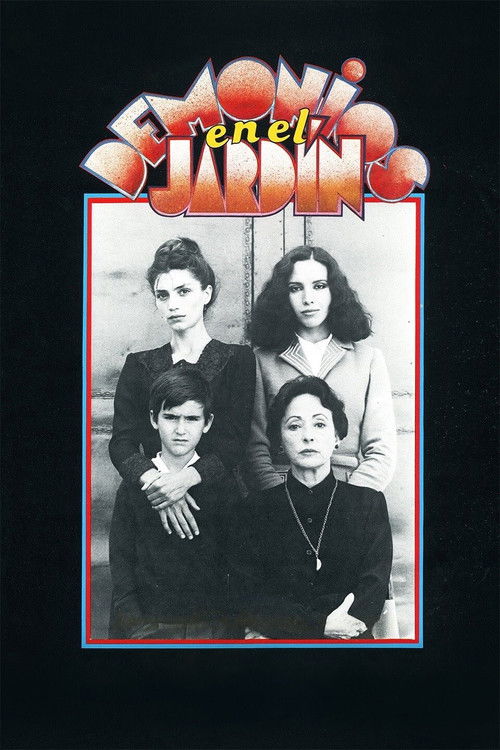
Demons in the Garden
1982
No user ratings available yet
Representation score: 5.3 out of 10
Representation Score
Good
2004
Director
Carlos Saura
Runtime
103 minutes
Average Rating
No ratings yetNew Showbiz Analysis
The film succeeds in challenging traditional gender roles by placing a young woman at the center of a violent, male-dominated conflict. Isabel Jimenez acts as an active investigator rather than a passive observer, providing a progressive narrative structure. However, the film lacks demographic breadth. The setting is culturally localized and homogeneous, offering little in the way of racial or LGBTQ+ diversity. The focus remains strictly on the psychological and social tensions within a specific Spanish village context. Ultimately, the work finds its strength in moral relativism and the empowerment of underrepresented voices, such as the neurodivergent character, even while it remains limited in its broader representation of identity.
Category Breakdown
The film lacks explicit depictions of LGBTQ+ identities or structures that go beyond the assumption that everyone is straight. The narrative focuses on familial feuds and property disputes rather than queer relationships.
Isabel Jimenez serves as a central protagonist who play a significant role in driving the story. She navigates village secrets and challenges patriarchal structures dominated by male violence and property disputes.
The story presents a relatively homogeneous demographic centered on localized Spanish village dynamics. There is no evidence of significant racial blending or non-white casting.
The film explores subjective truth and the deconstruction of traditional institutions. It challenges social hierarchies by positioning a underrepresented character as a source of truth.
The 'village idiot' is granted intellectual ability to act as a catalyst for the protagonist. This character serves as a truth-bearer rather than a mere plot device.
Present on Screen
Limited or Absent
Official Synopsis
Isabel Jimenez is a teenager witnessing a horrible feud between her own family and the Fuentes family, a feud involving broken hearts, property disputes and a mysterious fire that destroyed the Fuentes house. Isabel's uncle is murdered by Jeronimo Fuentes, who later tries to stab her father. After Jeronimo dies in jail, Isabel must look outside of her family for the truth, learning from the village idiot that her father may have set fire to the Fuentes home.
1982
1976
2004

2001

1994

2007
1994
1978
No reviews yet. Be the first to share your thoughts on this movie!
Use the rating form above to leave a star rating and optional review.