The Boy Who Walked Backwards
1995
No user ratings available yet
Representation score: 4.3 out of 10
Representation Score
Fair
2005
Director
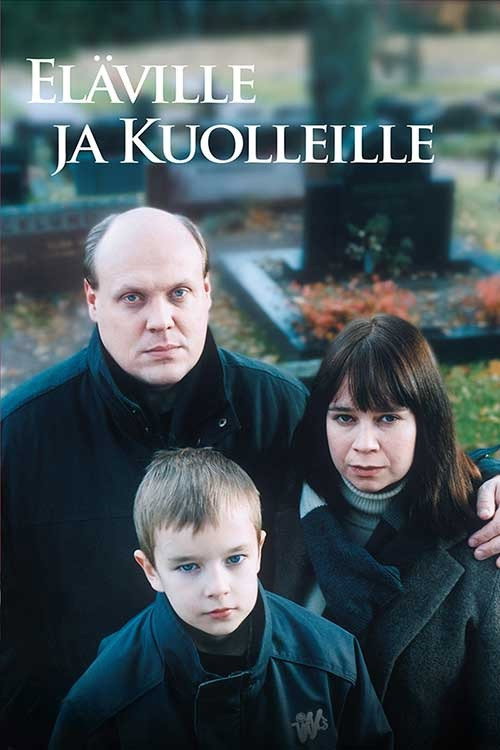
Kari Paljakka
Runtime
99 minutes
Average Rating
No ratings yetNew Showbiz Analysis
For the Living and the Dead is a localized Finnish drama that prioritizes psychological realism over demographic variety. It functions primarily as a character study of grief and the deconstruction of the nuclear family unit. The film succeeds in challenging traditional gender roles by allowing the female characters to drive the emotional narrative. However, the setting remains demographically narrow, lacking racial or LGBTQ+ representation. Ultimately, the work finds its depth in exploring the fractured nature of domestic life and the heavy burden of inherited family secrets.
Category Breakdown
The film focuses on a traditional suburban family structure. There is no explicit mention of LGBTQ+ characters or non-straight relationships within the narrative.
The story challenges traditional gender roles by contrasting the mother's outward grief with the father's suppressed guilt. It centers emotional expression within a female-led psychological landscape.
Set in a Finnish suburban environment, the film depicts a homogeneous social setting. There is no evidence of racial blending or non-white casting in the narrative.
The film critiques the idealized Western family by framing the domestic sphere as a site of trauma and dysfunction. It explores subjective morality through unresolved family secrets.
The narrative explores invisible disabilities through acute psychological trauma and anxiety. Timo’s school-related struggles provide a depiction of neuro-emotional distress following the family tragedy.
Present on Screen
Limited or Absent
Official Synopsis
An ordinary suburban family is shattered when their youngest son is killed in an accidental fire while locked inside the family's car on their yard. Mother Marja can't stop crying, father Jaakko can't cry at all but blames himself for the fire. Their remaining son Timo develops problems at school because of his constant worries about his parents' safety. In their grief, Marja and her sister Leena have to confront an old family secret, their little sister's accidental death for which Leena has quietly blamed herself through decades.
1995
2001
1995
2011

2006

2013
2002
2004
No reviews yet. Be the first to share your thoughts on this movie!
Use the rating form above to leave a star rating and optional review.