You're on Your Own
1959
No user ratings available yet
Representation score: 3.0 out of 10
Representation Score
Good
1959
Director
Isidoro M. Ferry, Marco Ferreri
Runtime
87 minutes
Average Rating
No ratings yetNew Showbiz Analysis
The film stands out for its sophisticated critique of social institutions, using the pursuit of a 'pisito' to challenge the stability of mid-century Spanish bourgeois life. By portraying marriage as a transactional necessity for survival, it overturns traditional domestic ideals. However, the narrative is confined to a localized setting and focused on economic struggles within a straight-centered context. The absence of diverse identities or explicit LGBTQ+ representation limits the film's diversity. Overall, the film's strength lies in its social realism and its ability to deconstruct the moral sanctity of the traditional family unit.
Category Breakdown
The film does not include explicit references to LGBTQ+ characters or non-cisgender identities. The story focuses on traditional heterosexual pressures related to marriage and property.
Marriage is portrayed as a pragmatic tool for economic survival rather than a romantic institution. Characters like Petrita and Doña Martina actively participate in socio-economic struggles.
The film is set in a localized, deteriorating Madrid where the cast appears homogeneous. There is no intentional focus on racial or ethnic diversity.
The story critiques the sanctity of family and capitalist goals by exploiting legal loopholes for property acquisition. It dismantles the idealized notion of domestic success through moral relativism.
The character Doña Martina is shown as old and frail, highlighting physical vulnerability. It is unclear if this portrayal grants her ability to act or merely serves as a plot device.
Present on Screen
Limited or Absent
Official Synopsis
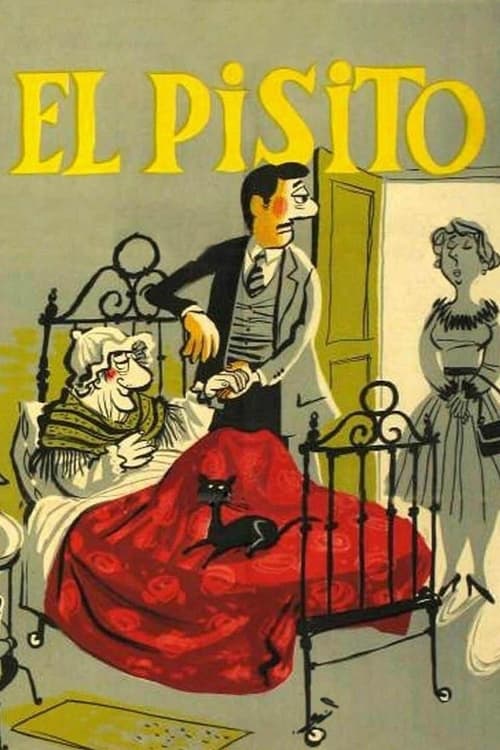
Rodolfo and Petrita each live in separate quarters in dilapidated Madrid, while looking to have a little apartment (or "pisito", in Spanish dialect). Unfortunately their low salaries prevent them from acquiring one. Soon, Rodolfo's co-workers urge him to marry the old and frail Doña Martina, who is the main tenant in the apartment he boards in. According to Spanish rent-control law, he could inherit the lease from his spouse. Thus begin his misgivings, and Petrita's.
1959
1958

1958

1967
1952

1989
1972

1951
No reviews yet. Be the first to share your thoughts on this movie!
Use the rating form above to leave a star rating and optional review.