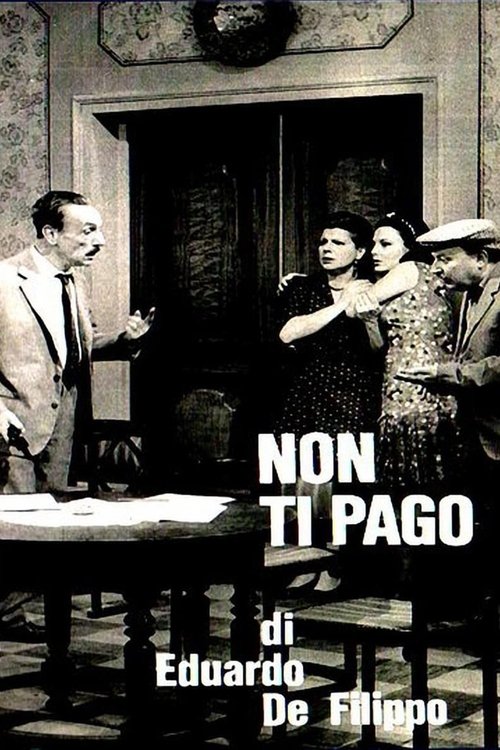
Non ti pago
1964
No user ratings available yet
Representation score: 4.4 out of 10

Representation Score
Good
1953
Director
Eduardo De Filippo
Runtime
98 minutes
Average Rating
No ratings yetNew Showbiz Analysis
Napoletani a Milano provides a sharp social commentary on the internal migration and class tensions of post-war Italy. It effectively challenges regional hierarchies by presenting the North as a negligent force against the Southern population. The film's strength lies in its critique of institutional failures and capitalist structures, highlighting the friction between different Italian identities. However, its scope is limited by its era, lacking explicit LGBTQ+ representation or detailed disability narratives.
Category Breakdown
The film does not include any explicitly documented LGBTQ+ characters or identities. Given its 1953 production context, there are no non-straight or non-cisgender representations.
The plot focuses on a family's legal and economic struggles against Northern dominance. While female characters in De Filippo's work often have strong emotional roles, the main emphasis is on the family's survival.
The film challenges monolithic views of Italian identity by focusing on Neapolitan migrants. It highlights the ability to act of Southern Italians as they navigate a dominant Northern environment.
The narrative criticizes traditional institutions and capitalist systems. By portraying Northern managers as negligent, the film dismantles regional power dynamics and emphasizes the experiences of underrepresented groups.
The story revolves around the physical impact of a structural tragedy. Although specific disabilities are not detailed, the plot underscores human vulnerability and systemic neglect.
Present on Screen
Limited or Absent
Official Synopsis
Afterfive people die in crumbling Naples housing run by Northerners, the Southern relatives trek to Milan to sue for damages.
1964

1981

1975

1981

1957

2002

1955

1961
No reviews yet. Be the first to share your thoughts on this movie!
Use the rating form above to leave a star rating and optional review.