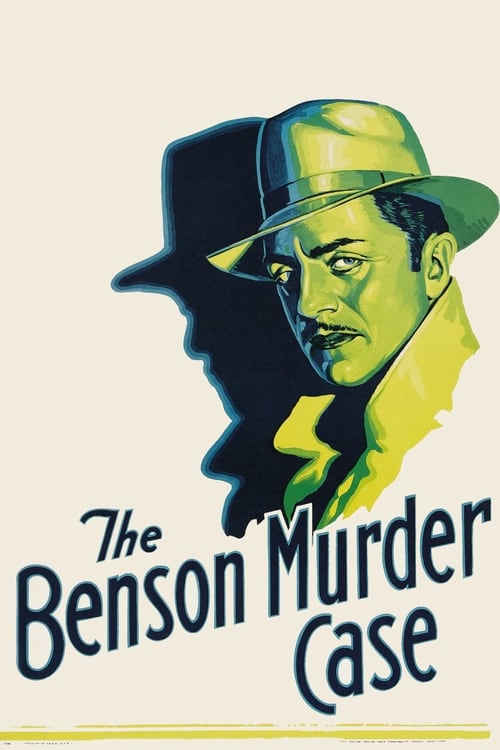
The Benson Murder Case
1930
No user ratings available yet
Diversity score: 1.6 out of 10

1933
NRDirector
William Beaudine
Runtime
74 minutes
Average Rating
No ratings yetSynopsis
A doctor who is also a “mentalist” confesses to a murder. The only problem is that the murder he’s confessed to hasn’t happened yet – although dead bodies are now starting to turn up all over the place. A reporter sets out to solve the “mystery”.
Overall Score
Minimal
Category Breakdown
LGBTQ+ Representation
The film lacks any evidence of non-cisnormative identities. It operates within the standard social constraints of the early Pre-Code era, focusing on traditional interpersonal dynamics.
Gender Representation
The narrative centers on a dysfunctional gender hierarchy. The wife is portrayed as an extravagant catalyst for the protagonist's moral crisis, reinforcing traditional domestic archetypes.
Racial & Ethnic Diversity
The production appears to adhere to the homogeneous casting norms of early 1930s Hollywood. It depicts white, Western urbanity as the default social norm.
Religious & Cultural Diversity
The story focuses on individual moral failure rather than systemic critique. It lacks an anti-capitalist or anti-Western perspective, centering instead on personal socioeconomic pressure.
Disability Representation
There is no indication of characters with visible or invisible disabilities. Disability is not utilized as a narrative device within this crime drama.
Strengths
Areas for Improvement
AI Analysis
The film functions as a conventional crime melodrama that relies heavily on established 1930s tropes. The central conflict is driven by a traditional gendered dynamic between a desperate man and an extravagant wife. Narratively, the work lacks intersectional complexity or any intentional disruption of social hierarchies. It remains firmly within the era's standard framework of individual criminality and domestic instability. Ultimately, the production reflects the homogeneous social norms of its time, offering a character study that avoids systemic or progressive critiques.
1930
1936
1942
1938
1933
1936

1960
1940
1940
1963
1935
1937
No reviews yet. Be the first to share your thoughts on this movie!
Use the rating form above to leave a star rating and optional review.