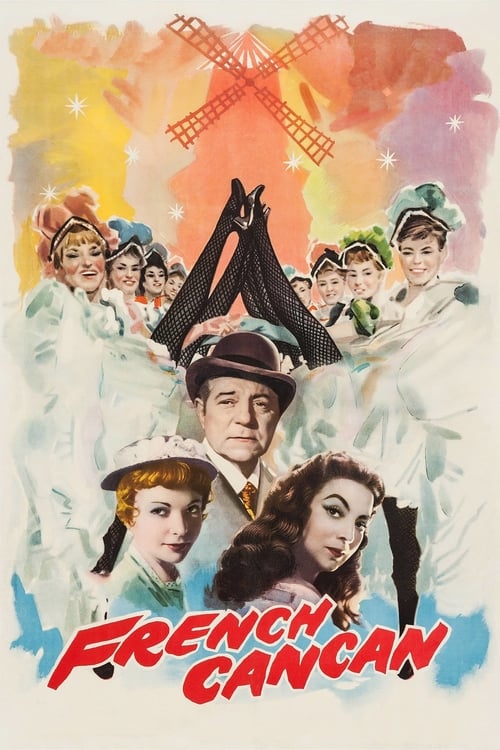
French Cancan
1955
No user ratings available yet
Representation score: 5.3 out of 10
Representation Score
Limited
1956
Director
Henri Decoin
Runtime
102 minutes
Average Rating
No ratings yetNew Showbiz Analysis
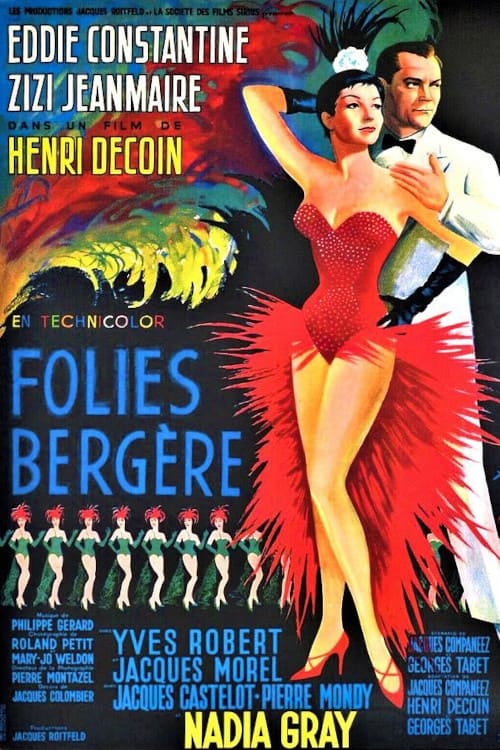
An Evening at the Music Hall functions as a standard mid-20th-century genre piece. It adheres to the stylistic and social conventions of 1956, prioritizing romantic spectacle over narrative subversion. The film lacks intentionality regarding multiple aspects of identity. It relies on traditional hierarchies of gender and race common to the era's European musical romances. Ultimately, the production serves as a period-typical romance that reinforces rather than disrupts the social mores of its time.
Category Breakdown
The film follows a traditional framework that assumes everyone is straight or cisgender. There is no evidence of non-traditional gender identities or narratives that question standard social norms.
Claudie's professional visibility as a star is tied to romantic clichés. The plot centers on a conventional pursuit between a soldier and a dancer.
The production reflects the homogeneous demographic standards of mid-century European cinema. There is no indication of non-white casting or diverse ethnic representation.
The story operates within a standard mid-1950s Western framework. It focuses on musical spectacle and romance without challenging existing social or institutional norms.
No visible or invisible disabilities are depicted as central to the character arcs or the progression of the plot.
Present on Screen
Limited or Absent
Official Synopsis
A GI on furlough attends a Folies-Bergères show. He falls in love with a dancer, Claudie, the star of the theater.
1955

1961
1936
1948
1968
1951
1949
1957
No reviews yet. Be the first to share your thoughts on this movie!
Use the rating form above to leave a star rating and optional review.