Spotlight Scandals
1943
No user ratings available yet
Representation score: 2.5 out of 10
Representation Score
Limited
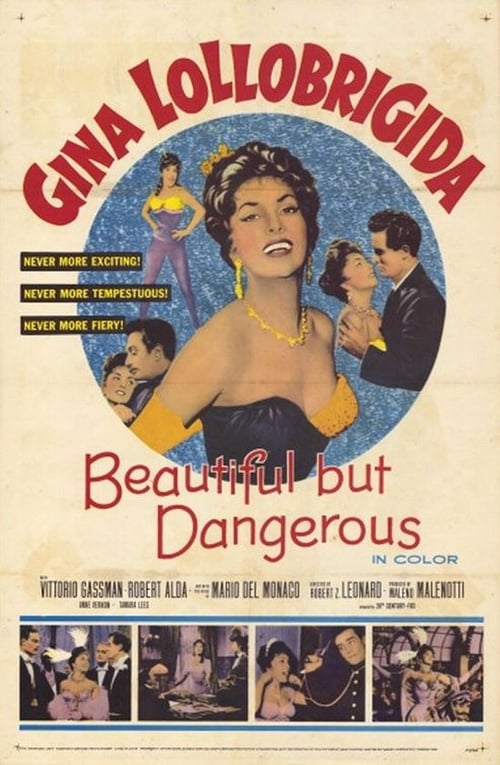
1955
TV-PGDirector
Robert Z. Leonard
Runtime
107 minutes
Average Rating
No ratings yetNew Showbiz Analysis
Beautiful But Dangerous is a classic mid-century romantic musical that adheres to established Hollywood conventions. While the protagonist achieves professional autonomy, the plot remains rooted in traditional social hierarchies and heterosexual courtship. The film utilizes international settings to create an escapist atmosphere, but these elements serve more as aesthetic markers rather than deep cultural explorations. Central conflicts revolve around class and romantic desirability. Ultimately, the film reflects the era's conventional storytelling, emphasizing romantic melodrama over subversion of systemic issues or diverse identity representation.
Category Breakdown
The film focuses on a traditional love triangle and does not include any representations of LGBTQ+ identities or non-cisgender characters.
Lina achieves professional success, but her journey is heavily influenced by male figures. The story highlights the tension between women's ability to drive the story and the control exerted by patriarchal structures.
The film showcases cosmopolitan settings in Russia and Paris, but ethnic diversity functions more as a marker of class and exoticism rather than a deep exploration of different cultures.
The narrative follows the 'star is born' storyline within a Western context, reinforcing traditional romanticism and social mobility through talent.
There are no visible or mentioned depictions of physical or neurodivergent disabilities in this production.
Present on Screen
Limited or Absent
Official Synopsis
Lina, a music hall singer, has fallen in love with Sergei, a Russian prince. Maestro Doria, who gives her voice lessons and who hopes to make her his mistress, takes her to Paris where she becomes the star of the "Folies-Plastiques".
1943
1955
1951

1937

1937

1951

1934

1953
No reviews yet. Be the first to share your thoughts on this movie!
Use the rating form above to leave a star rating and optional review.