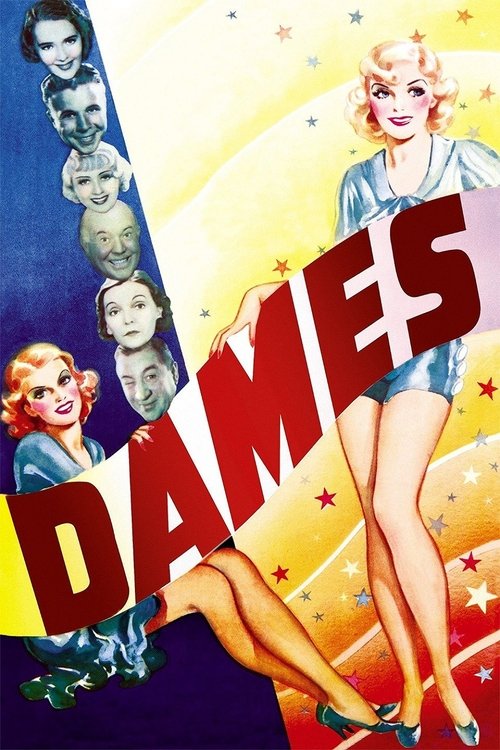
Dames
1934
No user ratings available yet
Diversity score: 2.1 out of 10

1946
NRDirector
Phil Karlson
Runtime
74 minutes
Average Rating
No ratings yetSynopsis
A struggling young singer falls for a nightclub owner whose father, a millionaire, is trying to shut it down.
Overall Score
Limited
Category Breakdown
LGBTQ+ Representation
The film follows a traditional romantic arc between a male nightclub owner and a female singer. It lacks depictions of same-sex intimacy or non-cisnormative identities.
Gender Representation
While the female lead is a professional performer, her agency is closely tied to her romantic connection. The central conflict is primarily driven by male characters.
Racial & Ethnic Diversity
The narrative appears to center on a white, Anglo-Saxon cast. It reflects the homogeneous casting standards typical of 1940s musical comedies.
Religious & Cultural Diversity
The story operates within a framework of traditional Western values. It focuses on themes of individual enterprise and family authority.
Disability Representation
The characters function within able-bodied archetypes. There is no mention of characters navigating physical, neurodivergent, or mental health conditions.
Strengths
Areas for Improvement
AI Analysis
Swing Parade of 1946 is a product of the mid-century studio system, prioritizing conventional musical romance over social subversion. The narrative relies on established tropes, such as the struggle between entrepreneurial spirit and established capital, which reinforces the era's standard social hierarchies. The film lacks intersectional depth, focusing instead on a heteronormative romantic pairing. Its representation of gender and race aligns with the homogeneous casting and traditional power dynamics prevalent in 1946 Hollywood. Ultimately, the work functions as a standard genre piece that does not attempt to disrupt or expand upon the social norms of its time.
No reviews yet. Be the first to share your thoughts on this movie!
Use the rating form above to leave a star rating and optional review.