
Come Tomorrow...
1962
No user ratings available yet
Diversity score: 4.1 out of 10
1955
Director
Lev Arnshtam, Leonid Lavrovsky
Runtime
92 minutes
Average Rating
No ratings yetSynopsis
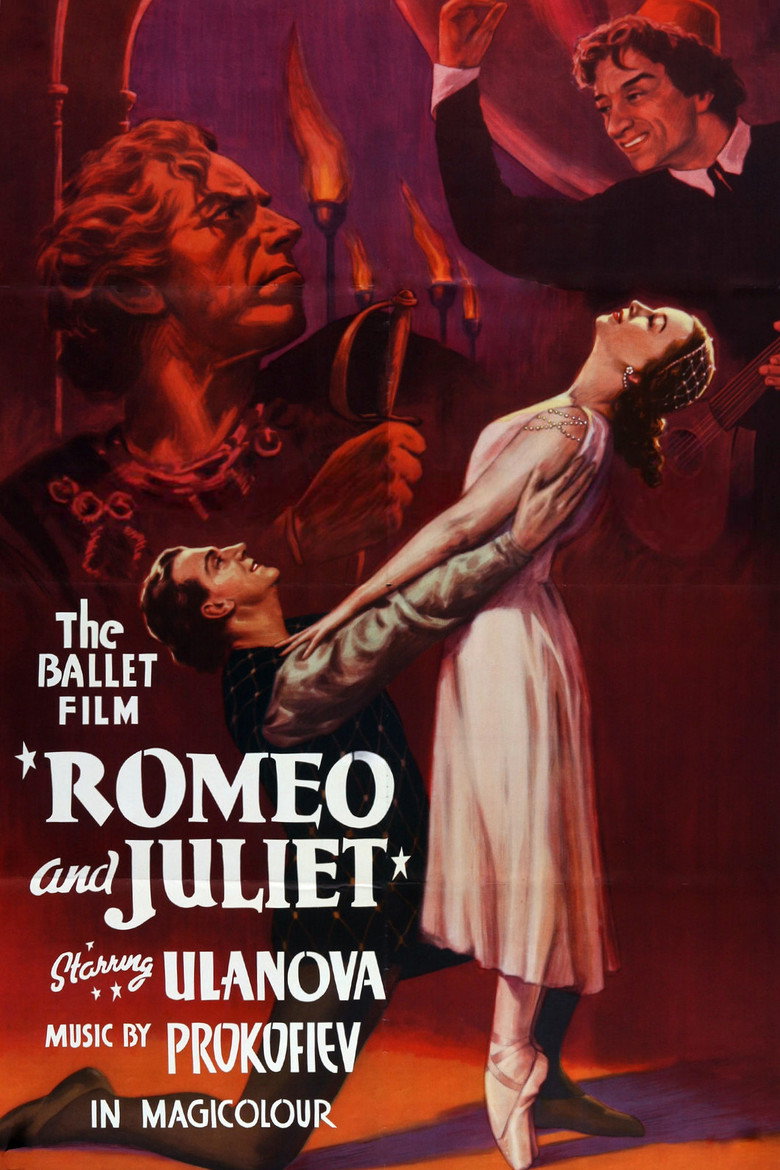
Russian ballet version of Shakespeare's tragedy about star crossed lovers from two feuding Italian Renaissance families. The film was based on the 1940 production of Prokofiev's ballet, choreographed by Leonid Lavrovsky. It won the Best Lyrical Film at the 1955 Cannes Film Festival, was nominated as the Palme d'Or.
Overall Score
Limited
Category Breakdown
LGBTQ+ Representation
The film follows the traditional Shakespearean romantic arc between Romeo and Juliet. There is no explicit depiction of non-cisnormative identities or same-sex intimacy within the narrative.
Gender Representation
Juliet serves as a central protagonist whose agency drives the tragedy. While the balletic medium showcases female physical strength, the plot remains a conventional romance within patriarchal structures.
Racial & Ethnic Diversity
The production adheres to the historical Italian Renaissance setting without modern intersectional modifications. Casting reflects the aesthetic standards of the mid-century Soviet era and Russian ballet traditions.
Religious & Cultural Diversity
Using ballet creates a universal, movement-based storytelling method that transcends linguistic barriers. However, the film remains anchored in a classical European framework and does not critique Western institutions.
Disability Representation
There is no evidence regarding the inclusion of characters with visible or invisible disabilities in this production.
Strengths
Areas for Improvement
AI Analysis
This Soviet-era ballet adaptation focuses on the preservation of classical art rather than social subversion. It translates Shakespearean tragedy into a stylized, non-verbal movement language that prioritizes aesthetic truth over modern identity politics. The film relies heavily on traditional romantic and historical tropes. While the medium of dance offers a unique layer of expression, the narrative lacks the intentionality needed to disrupt established social hierarchies. Ultimately, the production serves as a formalist interpretation of a classic text, remaining firmly within the cultural and aesthetic boundaries of its time and medium.
No reviews yet. Be the first to share your thoughts on this movie!
Use the rating form above to leave a star rating and optional review.