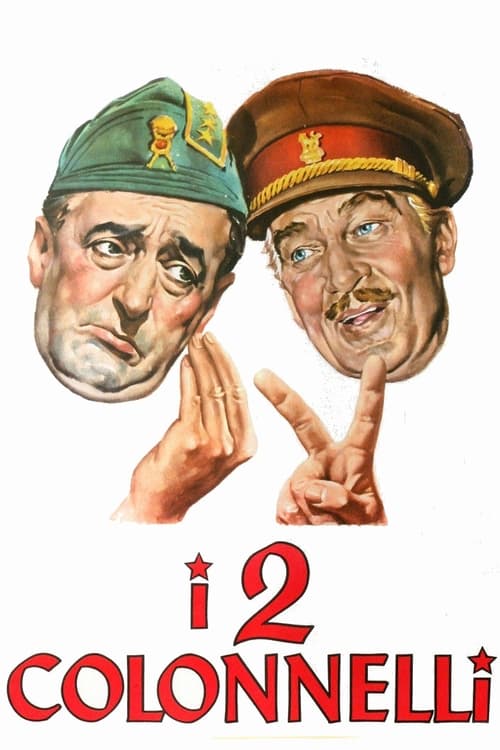
Two Colonels
1963
No user ratings available yet
Representation score: 1.3 out of 10
Representation Score
Fair
1960
Director
Steno
Runtime
110 minutes
Average Rating
No ratings yetNew Showbiz Analysis
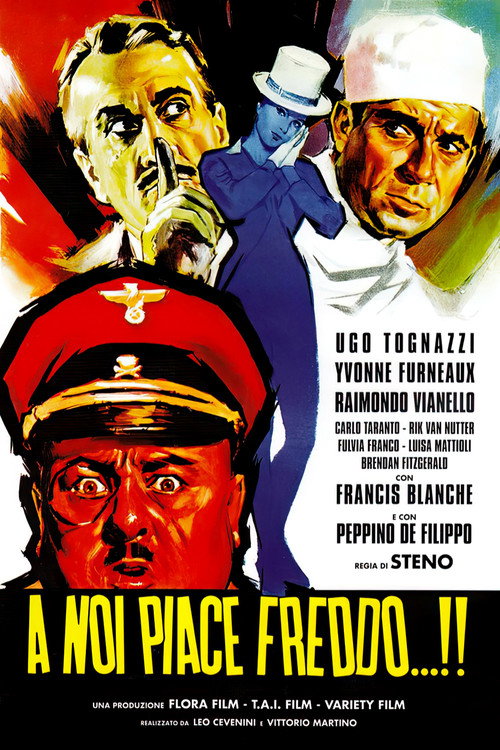
We Like It Cold is a period farce that uses the historical friction of 1943 Rome as a backdrop for comedy. The narrative structure focuses on situational irony and slapstick rather than a structured critique of identity hierarchies. The film benefits from its international setting, which naturally introduces diverse ethnic groups through the presence of Allied soldiers and Italian partisans. However, these interactions appear driven by comedic friction rather than deep exploration of overlapping identities. Ultimately, the work functions as a conventional genre piece. It lacks the documented evidence of intentional narrative subversion required to challenge traditional social or systemic hierarchies.
Category Breakdown
The film likely adheres to the social constraints of 1960. There is no evidence of non-straight identities or critiques of the assumption that everyone is straight within the narrative.
Female characters likely occupy roles defined by wartime chaos. While women in this genre can show wit, the film relies on established gender clichés without challenging male leadership.
The setting in Rome during the Allied occupation introduces various Western nationalities and local Italians. This provides a framework for ethnic variety through the international military presence.
The film engages with the political complexity of the resistance against Nazism. However, the farce genre prioritizes situational humor over deep ideological or religious critiques.
There is no evidence regarding the inclusion or portrayal of characters with physical or neurodivergent disabilities.
Present on Screen
Limited or Absent
Official Synopsis
A farcical account of the happenings in Rome in 1943 when the allied army and the partisans fight the nazis.
1963
1956
1967
1953
1961
1942
1960
1982
No reviews yet. Be the first to share your thoughts on this movie!
Use the rating form above to leave a star rating and optional review.