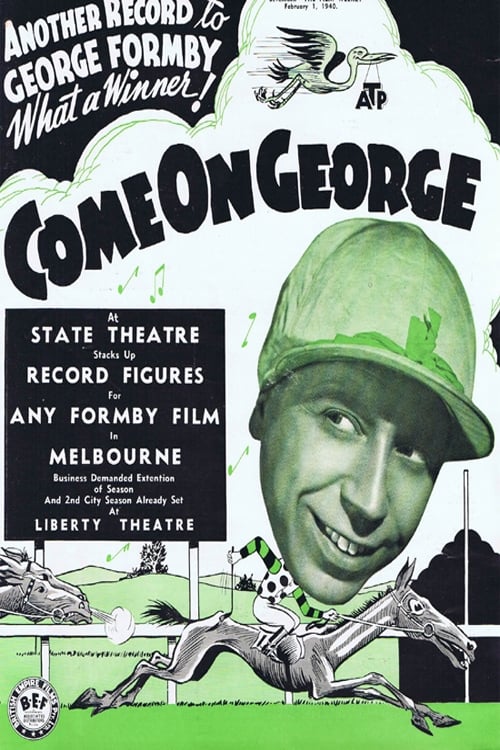
Come on George!
1939
No user ratings available yet
Representation score: 1.1 out of 10
Representation Score
Minimal
1939
ApprovedDirector
Leslie Goodwins
Runtime
64 minutes
Average Rating
No ratings yetNew Showbiz Analysis
This 1939 comedy operates as a standard piece of studio-era escapism. It follows the conventional narrative structure of its time, focusing on whimsical, low-stakes premises like animal training and gambling clichés. The film does not attempt to deconstruct social hierarchies or offer systemic critiques. Instead, it functions within the established cultural and cinematic constraints of the Golden Age of Hollywood. Because the plot relies on traditional professional pursuits and demographic norms, it lacks the intentionality needed to challenge the social status quo of the era.
Category Breakdown
The film adheres to the strict censorship rules of the Hays Code era. It lacks any queer subtext or character arcs, reinforcing traditional assumptions about straight relationships.
Men drive the plot through professional pursuits such as horse training and gambling. Female characters appear to serve primarily as romantic foils or domestic stabilizers.
The narrative likely reflects the homogeneous casting norms of 1939. There is no indication of a diverse cast or non-Anglo-Saxon characters driving the story.
The story centers on Western entertainment clichés like horse racing and gambling. It focuses on individual endeavor rather than critiquing religion or Western institutions.
The film provides no information regarding characters with visible or invisible disabilities. No disability is used as a central narrative device.
Present on Screen
Limited or Absent
Official Synopsis
A pigeon breeder is hired to train a racehorse that wins only when it drinks beer.
1939
1937
1946
1939
1951

1923
1950
1936
No reviews yet. Be the first to share your thoughts on this movie!
Use the rating form above to leave a star rating and optional review.