So You Want to Play the Horses
1946
No user ratings available yet
Representation score: 0.5 out of 10
Representation Score
Limited
1950
NRDirector
Frank Capra
Runtime
112 minutes
Average Rating
No ratings yetNew Showbiz Analysis
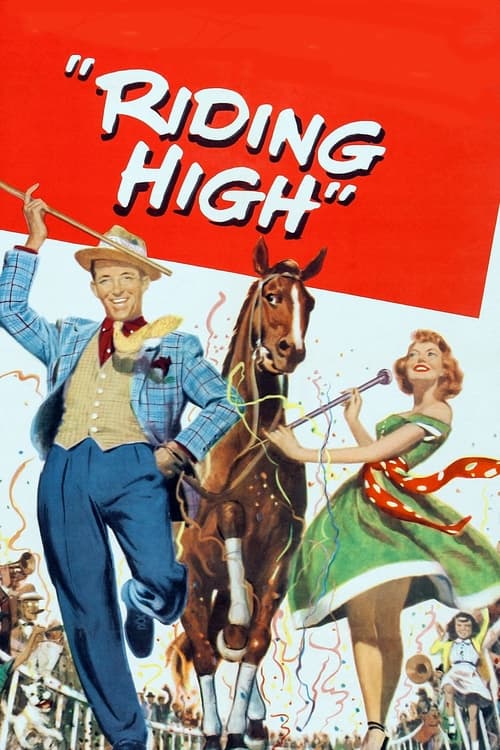
Riding High is a quintessential example of mid-century traditionalism. The film upholds established social, gender, and racial hierarchies, emphasizing stability and communal conformity. It reflects the demographic homogeneity of 1950s Hollywood, focusing on a largely Anglo-Saxon, middle-class environment. The production reinforces the era's status quo through its character archetypes and social structures. Ultimately, the film celebrates community cohesion and traditional social structures, lacking the complexity found in more modern cinema.
Category Breakdown
The film strictly follows the conventions of the 1950s, where everyone is assumed to be straight and cisgender. There is no depiction of non-binary genders or same-sex relationships.
Gender roles in the film follow traditional 1950s archetypes, with women mainly providing emotional support or romantic interest. Female characters do not hold positions of intellectual or structural authority.
The cast and setting depict a predominantly Anglo-Saxon, middle-class American environment. There are no significant characters of color or racial blending, and characters of color have minimal roles.
The narrative emphasizes traditional Western values, community stability, and patriotism. It prioritizes the preservation of small-town character and communal harmony.
There is no significant depiction of neurodivergence or physical disability. Characters function within a standard range of physical and mental ability.
Present on Screen
Limited or Absent
Official Synopsis
A horse trainer who has fallen on hard times looks to his horse, Broadway Bill, to finally win the big race.
1946

1945
1951

1928

1939
1937
1939

2021
No reviews yet. Be the first to share your thoughts on this movie!
Use the rating form above to leave a star rating and optional review.