Happy-Go-Lucky
1972
No user ratings available yet
Representation score: 2.6 out of 10
Representation Score
Limited
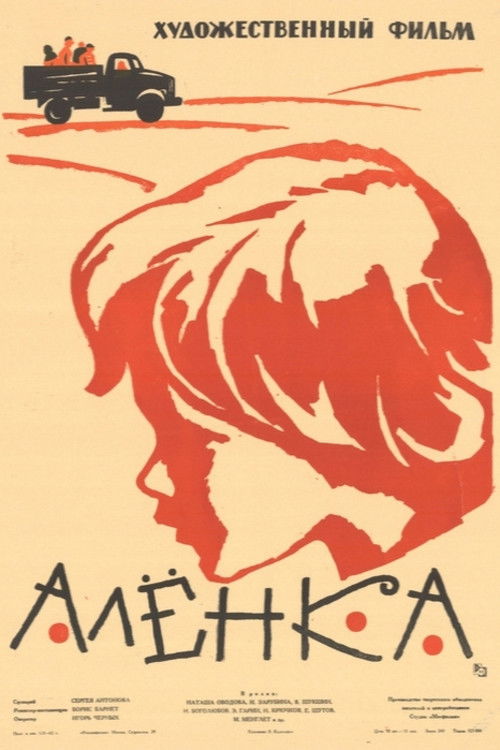
1962
Director
Boris Barnet
Runtime
86 minutes
Average Rating
No ratings yetNew Showbiz Analysis
Alyonka is a character study that highlights women's ability to drive the story and the intersection of cultures during a period of migration. The protagonist's ability to navigate social hierarchies offers a fresh perspective on leadership in a frontier setting. However, the film is limited by its mid-century context, offering no representation for LGBTQ+ identities or individuals with disabilities. The narrative remains anchored in the social norms of its era, resulting in a moderate diversity profile.
Category Breakdown
The film does not include any LGBTQ+ characters or non-straight identities. It focuses on traditional family structures and communal life in a mid-century frontier setting.
Women play significant roles in the film, especially through the protagonist Alyonka's social intelligence and the inclusion of a female dentist, highlighting women in specialized, intellectual positions.
Set in the Kazakh Steppes, the film introduces a diverse ethnic landscape through the stories of Russian migrants navigating this Central Asian geography.
The story emphasizes a collective identity and the struggles of the working class, prioritizing communal identity and shared social movements over individual pursuits.
There is no representation of characters with visible or invisible disabilities. No such representation is used as a narrative device.
Present on Screen
Limited or Absent
Official Synopsis
Set in 1955 when many migrated from Russia to the Steppes of Kazakhstan, this is the trip back to the Canal from the frontier and farms by a number of people who tell their settler stories. Alyonka Muratova is a winsome 13 year old who talks Dmitry Prokovich, the chief mechanic for the Soviet, into giving up his seat in the truck to a young mother with her infant daughter. Then Alyonka and Dmitry share the back of the open truck with a young woman, newly graduated dentist who has not been able to find a position, Stefan, a hitchhiker with a dog who hopes his upper-class wife will return to him and the countryside, and Vasselina Petrovolka, a woman who lost one of her twin daughters in a riding accident by the river shortly after they arrived, and now is returning to tell the other twin of her sister's fate. A warm hearted look at common folks traveling in the frontier.
1972
1971

1976
1967
1963
1959
1977
1971
No reviews yet. Be the first to share your thoughts on this movie!
Use the rating form above to leave a star rating and optional review.