
Ziegfeld Follies
1945
No user ratings available yet
Representation score: 2.7 out of 10
Representation Score
Limited
1930
ApprovedDirector
John Murray Anderson
Runtime
100 minutes
Average Rating
No ratings yetNew Showbiz Analysis
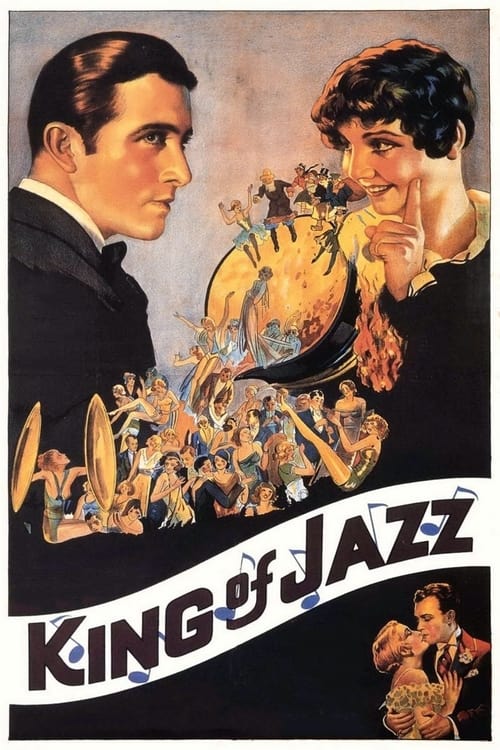
King of Jazz is a product of its time, emphasizing Technicolor spectacle and musical excellence over social diversity. While it offers visibility for Black jazz musicians and specialty dancers, this visibility is limited by the era's social frameworks and variety entertainment clichés. The film's structure reinforces traditional gender and cultural norms, with male musicians holding central authority and women serving primarily as visual elements. The production lacks any critique of Western institutions or traditional social hierarchies, instead celebrating the commercial popular culture of the time.
Category Breakdown
The film focuses on traditional musical performances without featuring any LGBTQ+ characters or themes that question the assumption that everyone is straight or cisgender.
The revue emphasizes traditional gender roles by highlighting male musicians as the main authorities and using female performers mainly as visual elements through dance and staged scenes.
Black jazz musicians and specialty dancers are prominently featured in the orchestra sequences. However, their performances are framed through contemporary variety entertainment clichés rather than modern, multi-layered approaches.
The film celebrates the Jazz Age aesthetic and high-society glamour, functioning as a polished endorsement of the era's cultural and economic structures.
There is no representation of neurodivergence or physical disabilities. Performers are shown through a lens that idealizes physical ability, consistent with musical theater standards.
Present on Screen
Limited or Absent
Official Synopsis
A large-scale revue musical built around Paul Whiteman and his orchestra, presenting a series of musical performances, sketches, and staged tableaux in early two-color Technicolor, emblematic of Hollywood’s early sound-era “all-star” musical productions.
1945
1933
1930
1929
1933
1938
1937

1929
No reviews yet. Be the first to share your thoughts on this movie!
Use the rating form above to leave a star rating and optional review.