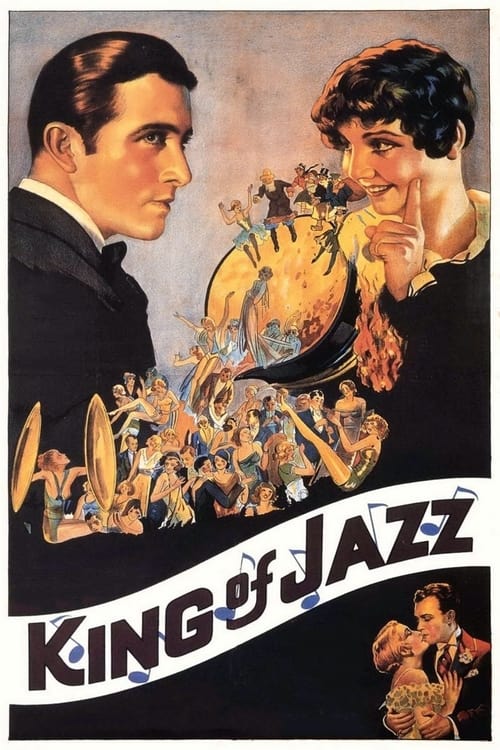
King of Jazz
1930
No user ratings available yet
Representation score: 3.2 out of 10

Representation Score
Minimal
1929
PassedDirector
John G. Adolfi
Runtime
128 minutes
Average Rating
No ratings yetNew Showbiz Analysis
The Show of Shows serves as a transitional piece from silent to sound cinema, offering technical novelty and a large cast. However, its content remains tied to the social hierarchies of 1929. Women are often relegated to decorative roles in dance troupes, while ethnic identity is portrayed through the lens of 'exoticism' rather than nuanced storytelling. The film prioritizes the prestige of the studio system over diverse or subversive narratives, reinforcing traditional archetypes and the male gaze.
Category Breakdown
The show focuses on variety acts and spectacle, without exploring any queer identities or non-straight narratives.
Women often play decorative roles in synchronized dance routines. Stars like Myrna Loy are featured but mostly serve traditional, decorative purposes.
The film uses orientalist casting, particularly with Myrna Loy as an 'exotic Far East beauty,' relying on stylized clichés rather than authentic cultural representation.
The production highlights the emerging Hollywood studio system and capitalist entertainment models, showcasing the era's dominant economic and cultural powers.
There is no documented evidence regarding the portrayal of characters with physical or neurodivergent disabilities in this production.
Present on Screen
Limited or Absent
Official Synopsis
Now hear this. The studio that gave the cinema its voice offered 1929 audiences a chance to see and hear multiple silent-screen favorites for the first time in a gaudy, grandiose music-comedy-novelty revue that also included Talkie stars, Broadway luminaries and of course, Rin-Tin-Tin. Frank Fay hosts a jamboree that, among its 70+ stars, features bicyclers, boxing champ Georges Carpentier, chorines in terpsichore kickery, sister acts, Myrna Loy in two-strip Technicolor as an exotic Far East beauty, John Barrymore in a Shakespearean soliloquy (adding an on-screen voice to his legendary profile for the first time) and Winnie Lightner famously warbling the joys of Singing in the Bathtub. Watch, rinse, repeat!
1930
1929
1929
1930
1933
1932

1948
1933
No reviews yet. Be the first to share your thoughts on this movie!
Use the rating form above to leave a star rating and optional review.