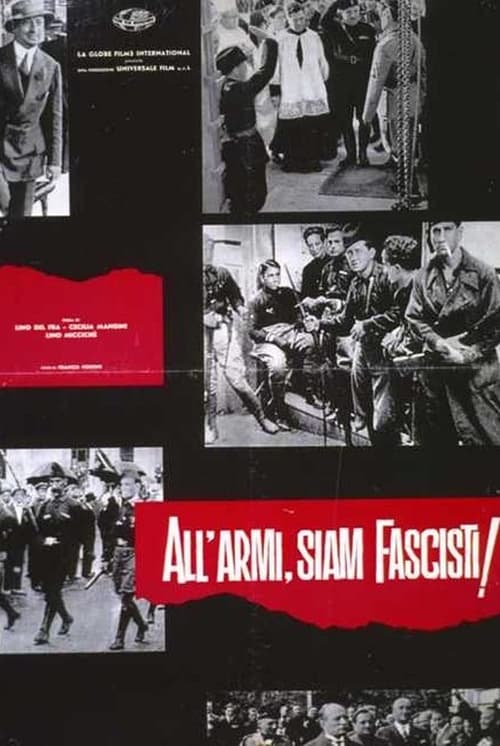
To Arms, We Are Fascists!
1962
No user ratings available yet
Representation score: 6.0 out of 10

Representation Score
Fair
2011
Director
Marco Bechis
Runtime
75 minutes
Average Rating
No ratings yetNew Showbiz Analysis
Marco Bechis uses the Luce archives to deconstruct how fascist propaganda operates. By contrasting everyday life with state-sponsored consensus, the film transforms historical newsreels into a study of systemic control. The documentary's critique is heavily influenced by its historical source material. While it lacks direct representation of LGBTQ+ identities or diverse ethnic groups, it excels in its cultural critique of nationalist fervor. Ultimately, the film succeeds as a sophisticated examination of power. It repurposes artifacts of oppression to reveal the erosion of individual autonomy by the state.
Category Breakdown
The film focuses on the social realities of the fascist era, where there is no explicit depiction of LGBTQ+ identities or narratives centered around these communities.
The film examines how gender roles are weaponized by totalitarian regimes to maintain order. It implicitly challenges the traditional gender hierarchies used to support fascist ideologies.
The archival material primarily centers on the dominant ethnic identity of the time. The film critiques the homogeneity required by such regimes.
The film portrays traditional Western institutions and propaganda as corrupt and manipulative. It serves as an anti-authoritarian critique of historical Western political structures.
There is insufficient evidence to assess the portrayal of disability within the available archival material.
Present on Screen
Limited or Absent
Official Synopsis
Using astounding footage from the Luce archives (newsreels, but also true films) Il sorriso del capo/The Smile of the Leader shows how propaganda works, presents everyday life in its most revealing details, and describes a country's "education". Marco Bechis explores the feeling of consensus: he tells us where it originates, what tools are used to spread it, how it is opposed. The thread running through the film is a voice, enigmatic until the end, narrating in the first person what it is like to grow up under fascism.
1962

1935
2022
2015

2021

2017
1974
2011
No reviews yet. Be the first to share your thoughts on this movie!
Use the rating form above to leave a star rating and optional review.