Zen
2009
No user ratings available yet
Representation score: 4.5 out of 10
Representation Score
Fair
1987
Director
Rentaro Mikuni
Runtime
139 minutes
Average Rating
No ratings yetNew Showbiz Analysis
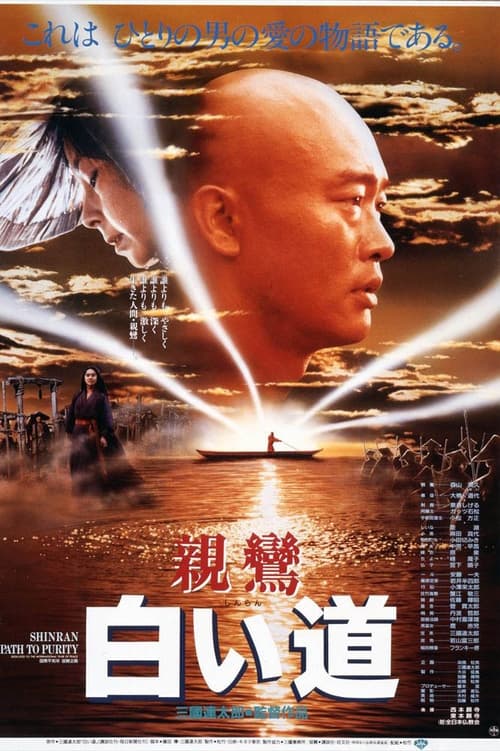
Shinran: Path to Purity is a historical drama that excels in critiquing intellectual and institutional structures. It focuses on the protagonist's rebellion against rigid, elite-focused religious hierarchies, offering a meaningful exploration of social and spiritual accessibility. However, the film lacks diversity in social identities. It remains centered on a male-centric framework that reflects the 12th-century setting but offers little representation for women or LGBTQ+ individuals. The narrative focuses solely on the spiritual evolution of a male figure.
Category Breakdown
The film focuses on a single male character's spiritual journey and does not include any LGBTQ+ identities or critiques of the assumption that everyone is straight or cisgender.
The story centers around male scholars and noblemen, depicting a period where women had limited roles and did not challenge the status quo.
Set in 12th-century Japan, the cast is ethnically uniform, reflecting the historical context rather than a modern effort at diverse representation.
The film explores the deconstruction of exclusive religious institutions like Shingon and Zen, advocating for a more inclusive and accessible spiritual path.
There is no mention of characters dealing with physical, neurodivergent, or mental health conditions in the narrative.
Present on Screen
Limited or Absent
Official Synopsis
In the 12th century, Buddhism was still a relatively new religion in Japan. At that time, one school (Shingon) offered extensive training in complex and very demanding practices which might eventually bring about spiritual purification and realization. Various Zen schools offered students a lengthy path, literally composed of a blank wall and unceasing meditation. Yet another school (Tendai) emphasized complex metaphysics and the study of philosophical systems. Basically, all of them were designed to cater to the few who were able to give up everything else in their lives and focus on liberation, such as scholars and noblemen. In this historical and biographical drama, this is the situation that the young Shinran (1173-1263) discovered when he began exploring Buddhism as an alternative to the violence and ceaseless civil wars that racked Japan at the time.
2009

1943
1989
1950

1925

1991
1989

1954
No reviews yet. Be the first to share your thoughts on this movie!
Use the rating form above to leave a star rating and optional review.