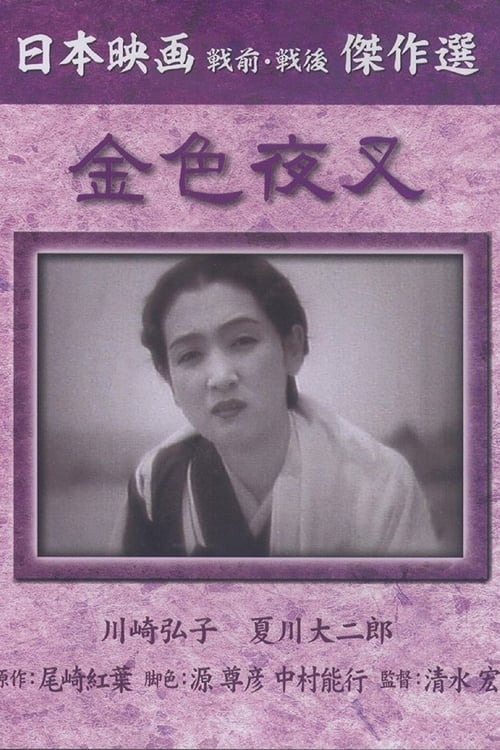
The Golden Demon
1937
No user ratings available yet
Representation score: 4.2 out of 10

Representation Score
Fair
1963
Director
Tomotaka Tasaka
Runtime
137 minutes
Average Rating
No ratings yetNew Showbiz Analysis
A House in the Quarter is a period drama that explores the conflict between personal desires and rigid societal structures. It uses a historical setting to examine how economic necessity and institutionalized labor affect personal freedom. The film successfully deconstructs traditional social roles, especially through its portrayal of a woman navigating a landscape of masculine and economic pressures. It provides a detailed look at mid-century Japanese social hierarchies and class distinctions. However, the narrative operates within a strictly traditional gender framework and a culturally homogeneous setting. It lacks modern markers of diversity or characters who reflect more than one aspect of diversity beyond its specific historical context.
Category Breakdown
The film focuses on a traditional love triangle involving a male customer, a female protagonist, and a priest. There is no indication of queer undertones or non-traditional gender identities.
Yuko faces systemic oppression and patriarchal control. The story emphasizes her internal emotional strength as she resists the control implied by her customer, Takamatsu.
Set in Kyoto, the film portrays a culturally uniform Japanese society. It highlights localized social hierarchies and class differences without blending in multi-layered racial diversity.
The story critiques traditional social stability by highlighting the cruelty within established hierarchies. The priest's presence creates tension between religious institutions and personal passion.
There are no visible or invisible disabilities depicted as central to the character arcs or the plot progression.
Present on Screen
Limited or Absent
Official Synopsis
With her family suffering from extreme poverty, Yuko, as the eldest daughter, is sold to a successful brothel in Kyoto. There she is assigned to serve Takamatsu, one of the brothel’s top customers. But while Takamatsu falls madly in love with Yuko, she finds herself attracted to a young priest named Kunugida. Torn by jealousy, Takamatsu hatches an evil plan to tear them apart.
1937

1939
1966

1957

1957
1958

1964

1965
No reviews yet. Be the first to share your thoughts on this movie!
Use the rating form above to leave a star rating and optional review.