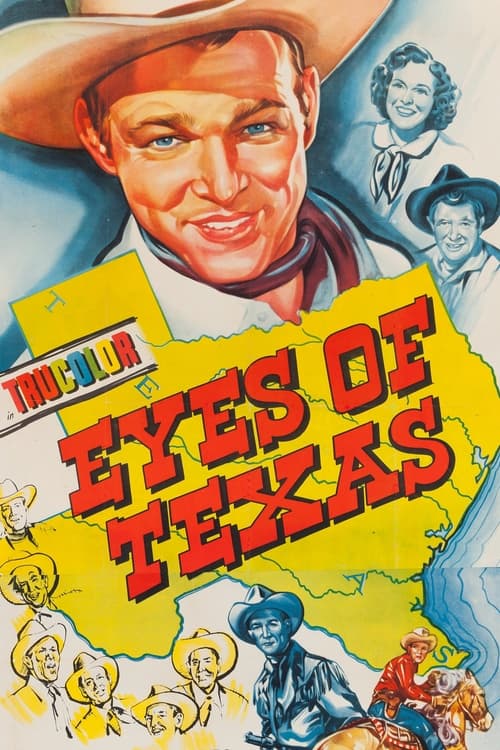
Eyes of Texas
1948
No user ratings available yet
Representation score: 0.4 out of 10
Representation Score
Minimal
1946
GDirector
William Witney
Runtime
72 minutes
Average Rating
No ratings yetNew Showbiz Analysis
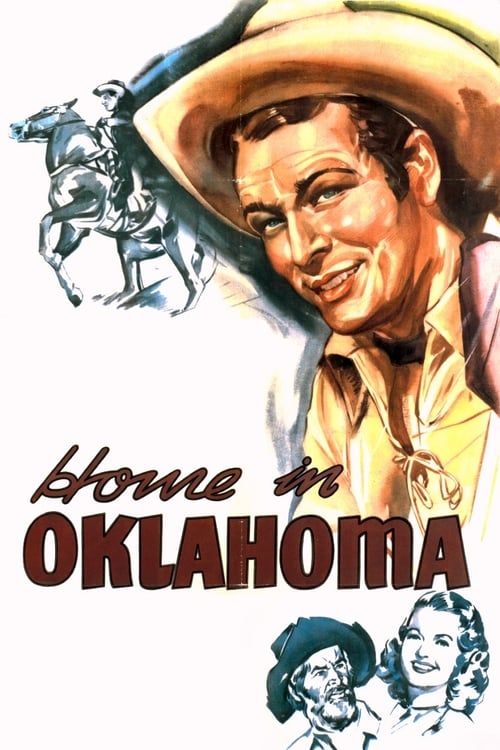
Home in Oklahoma is a quintessential 1940s B-Western that prioritizes traditional heroism and clear moral distinctions. The narrative adheres strictly to the social and gender hierarchies of its time, offering little disruption to prevailing cultural norms. The film relies on a homogeneous social structure and conventional archetypes. While it provides some professional independence for a female reporter, the central power dynamics and heroic actions remain firmly rooted in traditional masculinity. Ultimately, the work functions as a standard genre piece. It focuses on restoring order and protecting legacy through individual heroism, reinforcing the established social frameworks of the mid-century Western tradition.
Category Breakdown
The film follows a conventional structure typical of 1940s Westerns, with no evidence of non-traditional gender identities or same-sex relationships.
Connie Edwards demonstrates professional independence as a reporter, but her role mainly supports the male protagonist. Leadership and physical heroism are centered on the male character, Roy Rogers.
The film reflects mid-century social norms with a predominantly white cast. There are no significant roles for non-white characters.
The plot emphasizes community stability and the protection of property. It upholds traditional Western values, such as the importance of a will and the care of a minor.
There are no visible or invisible disabilities portrayed as central to the character arcs or the plot progression.
Present on Screen
Limited or Absent
Official Synopsis
In this Roy Rogers entry, featuring a song written by Oklahoma Governor Roy J. Turner (making him and Lousiania's Jimmie Davis and Texas' W.E. "Pappy" O'Daniel possibly the only state governors to write songs used in a western), Flying U ranch owner Sam Talbot is killed by a fall from a horse. St. Louis reporter Connie Edwards comes to check a rumor that he might have been murdered. She goes to Roy Rogers, editor of the local newspaper, and he takes her to the reading of Talbot's will. The ranch is left to Talbot's 12-year-old ward, Duke Lowery, much to the dismay of Talbot's niece, Jan Holloway. After some attempts on Duke's life, Roy finally proves that Jan, Steve McClory and coroner Jim Judnick had Talbot killed and are conspiring to do the same for Duke, making Jan the last heir.
1948
1942
1948
1945
1945

1947
1950
1944
No reviews yet. Be the first to share your thoughts on this movie!
Use the rating form above to leave a star rating and optional review.