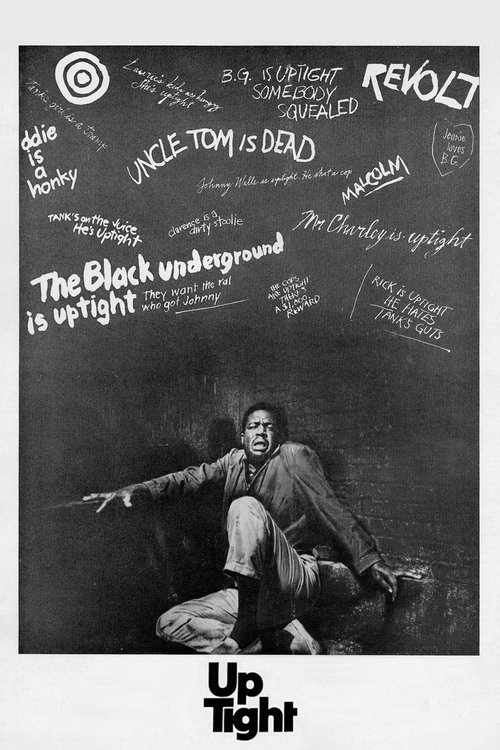
Uptight
1968
No user ratings available yet
Representation score: 5.3 out of 10
Representation Score
Limited
1969
PG-13Director
Robert Alan Aurthur
Runtime
122 minutes
Average Rating
No ratings yetNew Showbiz Analysis
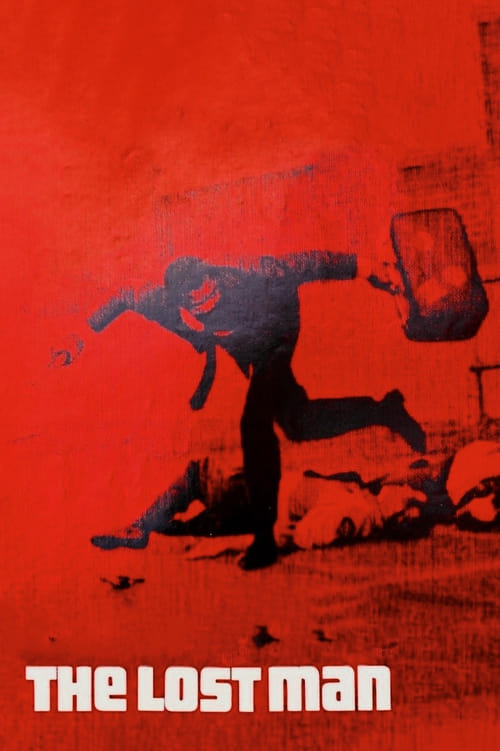
The Lost Man stands out for its focus on Black political ability to act. By centering a militant group's revolutionary struggle, the film challenges passive minority stereotypes common in 1969 cinema. However, the film's diversity is narrow, focusing mainly on racial representation. It lacks broader inclusion of LGBTQ+, disability, or significant gender diversity. Ultimately, the work is a study in political resistance but remains tied to traditional masculine and conventions that assume everyone is straight.
Category Breakdown
The film does not include any characters with non-binary gender identities or LGBTQ+ representation. It focuses solely on cisgender characters.
The story emphasizes male-driven political action, reinforcing traditional masculine leadership roles and hierarchical structures typical of the genre.
The film centers on a Black militant group, giving significant roles to characters of color. This contrasts with the era's usual focus on white protagonists.
The movie explores anti-capitalist themes and critiques of systemic issues. It portrays the protagonists' actions as necessary for political change.
The film does not feature any characters with visible or invisible disabilities. It does not address neurodivergent or physical disabilities.
Present on Screen
Limited or Absent
Official Synopsis
A gang of black militants plots to rob a factory to finance their "revolutionary struggle."
1968
1971
1972
1967

1970

1972

1959
1972
No reviews yet. Be the first to share your thoughts on this movie!
Use the rating form above to leave a star rating and optional review.