The Wold-Shadow
1972
No user ratings available yet
Representation score: 7.8 out of 10
Representation Score
Fair
1972
Director
Peter Rose
Runtime
8 minutes
Average Rating
No ratings yetNew Showbiz Analysis
Incantation is a formalist, experimental work that replaces traditional human-centric storytelling with a sensory exploration of organic forms. Its strength lies in its structural disruption of Western-centric cinematic norms through the use of non-Western liturgical elements. Because the film lacks characters, it cannot address identity-based representation such as gender, race, or LGBTQ+ status through narrative. Instead, diversity is expressed through the film's sonic and spiritual architecture. The work succeeds in elevating non-Western textures, but its lack of human subjects prevents it from engaging with social identities in a traditional sense.
Category Breakdown
The film does not include any character-driven dialogue or interpersonal relationships that would suggest LGBTQ+ narratives or identities. It focuses on organic textures and rhythmic imagery instead.
By removing human protagonists, the film avoids reinforcing traditional gender hierarchies or patriarchal leadership. However, it does not actively challenge traditional gender roles through characterization.
The film incorporates non-Western spiritual elements by using a chant derived from Islamic liturgy. This elevates non-Anglo-Saxon cultural textures to a central position of importance.
The work demonstrates cultural subversion by using religious liturgy as a rhythmic tool. This aligns with a post-colonial appreciation of non-Western liturgical traditions.
As a non-narrative, formalist study of textures and light, the film contains no characters. Therefore, no assessment of disability representation is possible.
Present on Screen
Limited or Absent
Official Synopsis
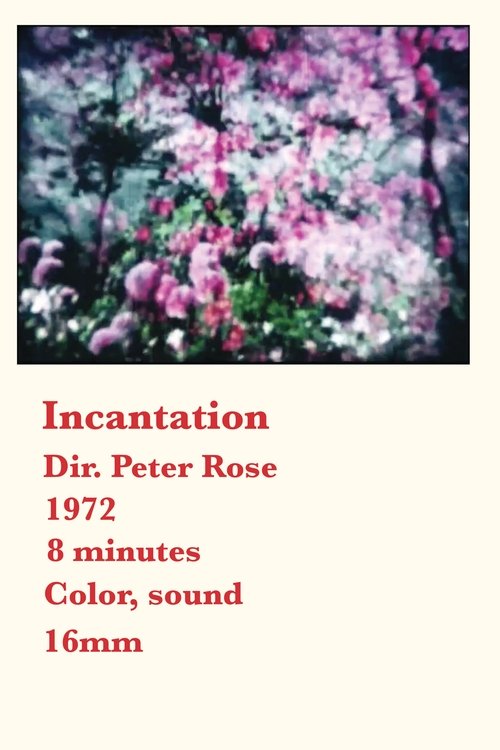
Using rapidly edited, superimposed images of plants, trees, water, the sun and the moon, Incantation weaves a dynamic tapestry of organic forms and textures, combining its images with a fierce rhythmic intensity so as to suggest a kind of natural force. The film was shot entirely in the camera, in 8mm, according to a pre-arranged, music-like score, and then blown up to 16mm using a home-made optical printer. The accompanying sound track, a chant taken from Islamic liturgy, is breath-based and brings the film into the form of a prayer. Written by re:voir. - Preserved by the Academy Film Archive in 2016.
1972
1997
1975
1974
1972
1973
2000
1964
No reviews yet. Be the first to share your thoughts on this movie!
Use the rating form above to leave a star rating and optional review.