
The Unburied Man
2004
No user ratings available yet
Representation score: 7.9 out of 10
Representation Score
Fair
2017
Director
David Mrnka
Runtime
130 minutes
Average Rating
No ratings yetNew Showbiz Analysis
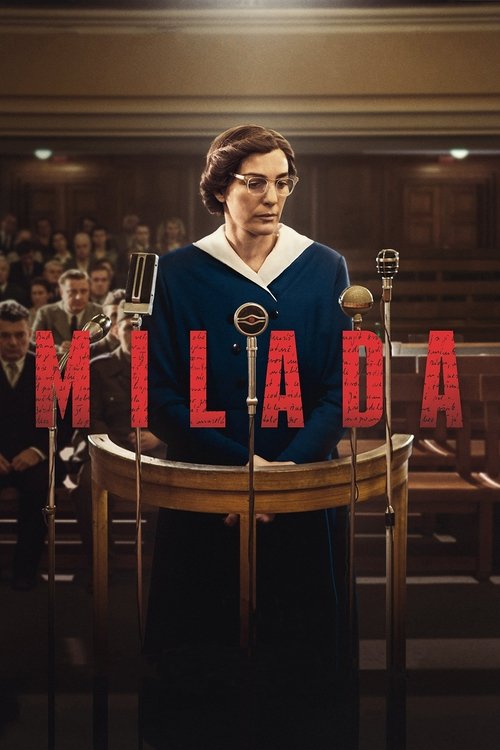
Milada is a character-driven historical drama that finds its strength in subverting traditional gender roles. By centering on Milada Horáková, the film places a woman at the heart of a high-stakes political struggle, challenging the tendency to cast men as the sole architects of history. However, the film is limited by its specific historical and geographical setting. The ethnic homogeneity of the period and the lack of focus on identity-driven conflicts restrict the diversity of its social composition. While culturally rich in its critique of systemic corruption, the film remains a traditional period piece in its social makeup. Ultimately, the film succeeds as a study of individual resistance against state oppression, even if it does not explore a wide range of social identities.
Category Breakdown
The film focuses on political and ideological struggles during the 1948 Czechoslovak coup. There is no explicit depiction of non-straight relationships within the narrative.
Milada Horáková serves as a central agent of resistance in a male-dominated political landscape. Her role challenges traditional feminine stereotypes by positioning a woman as a primary political actor.
The setting reflects the ethnic homogeneity of pre-WWII and post-1948 Czechoslovakia. The cast aligns with the historical and geographical context of the era.
The story offers a deep critique of totalitarianism and state-mandated truths. It emphasizes the individual's struggle against a corrupt, systemic ideological machine.
The narrative does not feature characters navigating physical, sensory, or neurodivergent conditions.
Present on Screen
Limited or Absent
Official Synopsis
Pre-WWII Czech democratic politician Milada Horáková was one of the first victims of the communist regime in Czechoslovakia. Opposing the 1948 coup but not leaving the country, she was arrested and tried for treason on fabricated charges in a show trial broadcast on the radio.
2004
1989
1986
2018
2023

2019
2016
2018
No reviews yet. Be the first to share your thoughts on this movie!
Use the rating form above to leave a star rating and optional review.