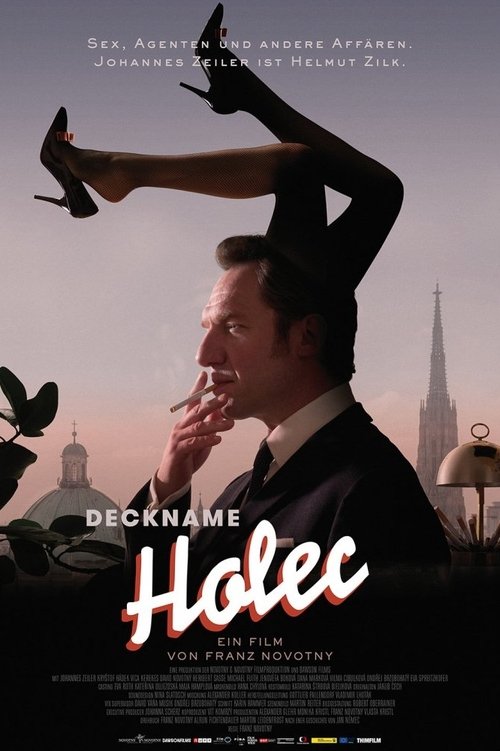
Deckname Holec
2016
No user ratings available yet
Representation score: 4.9 out of 10
Representation Score
Limited
2023
Director
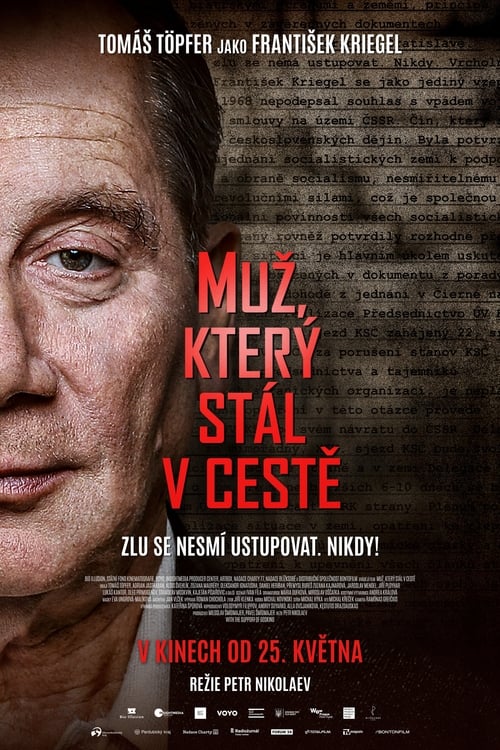
Petr Nikolaev
Average Rating
No ratings yetNew Showbiz Analysis
The film is a focused historical drama centered on the political resistance of František Kriegel during the 1968 Soviet occupation. It prioritizes themes of individual ability to act and the subversion of authoritarian structures over broad demographic representation. While the film excels in critiquing centralized, authoritarian institutions and geopolitical hierarchies, it lacks data regarding LGBTQ+ or disability representation. The narrative structure is built around a specific historical struggle for national and political autonomy. Ultimately, the work serves as a study of systemic oppression and moral defiance, though its scope is narrow in terms of diverse representation.
Category Breakdown
The film does not include any explicit references to LGBTQ+ characters or themes. Queer representation is entirely absent from this historical political narrative.
The story focuses on high-stakes political leadership and intellectual resistance. While Kriegel's moral strength is highlighted, the historical context indicates a male-dominated sphere with limited information on women's roles.
The narrative centers on the geopolitical context of the Prague Spring. It examines national identity through the lens of a local population resisting an external occupying force.
The film provides a strong critique of geopolitical hierarchies. It portrays the resistance against Soviet occupation as a fight for individual conscience against centralized, authoritarian institutions.
There is no evidence of the portrayal of physical or neurodivergent disabilities. The narrative focuses solely on political and historical conflict.
Present on Screen
Limited or Absent
Official Synopsis
A drama that tells the story of the physician and politician MUDr. František Kriegel, the hero of the Prague Spring of 1968, who was arrested and kidnapped to Moscow on the night of August 21st together with five leaders of the party and the state (Dubček, Černík, Smrkovský, Špaček and Šimon). He was the only Czechoslovak politician who managed to stand up to Brezhnev in Moscow captivity, even under the threat of liquidation, and not to sign the Moscow Protovol which meant agreeing to the occupation of Czechoslovakia in 1968.
2016
2014
2017
2003

2004
1984
2003
1981
No reviews yet. Be the first to share your thoughts on this movie!
Use the rating form above to leave a star rating and optional review.