Miyamoto Musashi
1944
No user ratings available yet
Representation score: 1.3 out of 10
Representation Score
Limited
1959
Director
Sadatsugu Matsuda
Runtime
92 minutes
Average Rating
No ratings yetNew Showbiz Analysis
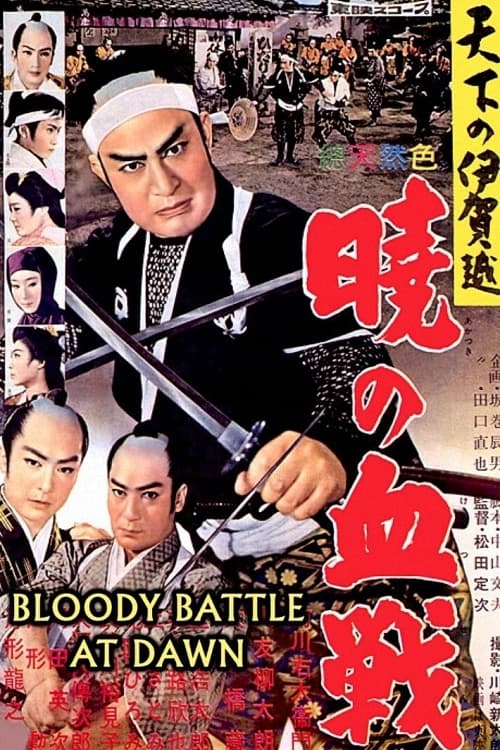
Bloody Battle at Dawn is a traditional jidaigeki that centers on classic themes of honor and revenge. The narrative is structured around the martial prowess and lineage of the samurai class, which inherently limits diverse representation. The film operates within a homogeneous social structure, focusing on internal clan dynamics. This historical setting reinforces established power hierarchies rather than challenging them. Ultimately, the film serves as a period-accurate reflection of its era, emphasizing duty and social stability over modern perspectives that reflect multiple aspects of identity.
Category Breakdown
The film follows the traditional social structures of the Sengoku and Edo periods, where everyone is assumed to be straight and cisgender. There are no queer narratives or non-cisgender identities presented.
The story revolves around male-driven conflicts and revenge. A wife is mentioned, but she serves mainly as a connection between events rather than having her own independent role.
Set in the Iga province, the cast is ethnically uniform. The narrative focuses on internal Japanese clan dynamics without involving characters from different ethnic backgrounds.
The plot emphasizes traditional bushido, family honor, and strict social hierarchies. It highlights the importance of ancestral loyalty and the repercussions of breaking societal codes.
There are no characters with visible or invisible disabilities in the narrative.
Present on Screen
Limited or Absent
Official Synopsis
A story of revenge between two samurai families on the Igagoe Road. Araki Mataemon born in the province of Iga. He studied the art of the sword under the Yagyu family. He helped the younger brother of his wife Watanabe Kazuma take revenge on his enemy Kawai Matagoro. Ichikawa Utaemon plays Araki Matemon and his son Kinya Kataoji plays Kazuma.
1944
2003
1958
1957
2010
1941
1965
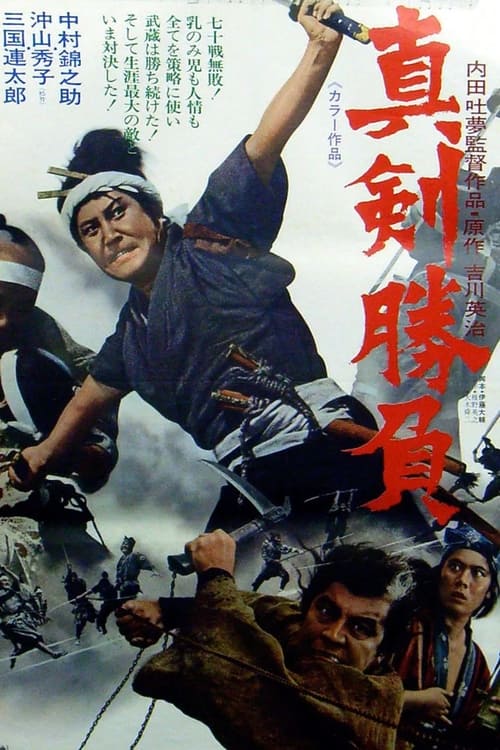
1971
No reviews yet. Be the first to share your thoughts on this movie!
Use the rating form above to leave a star rating and optional review.